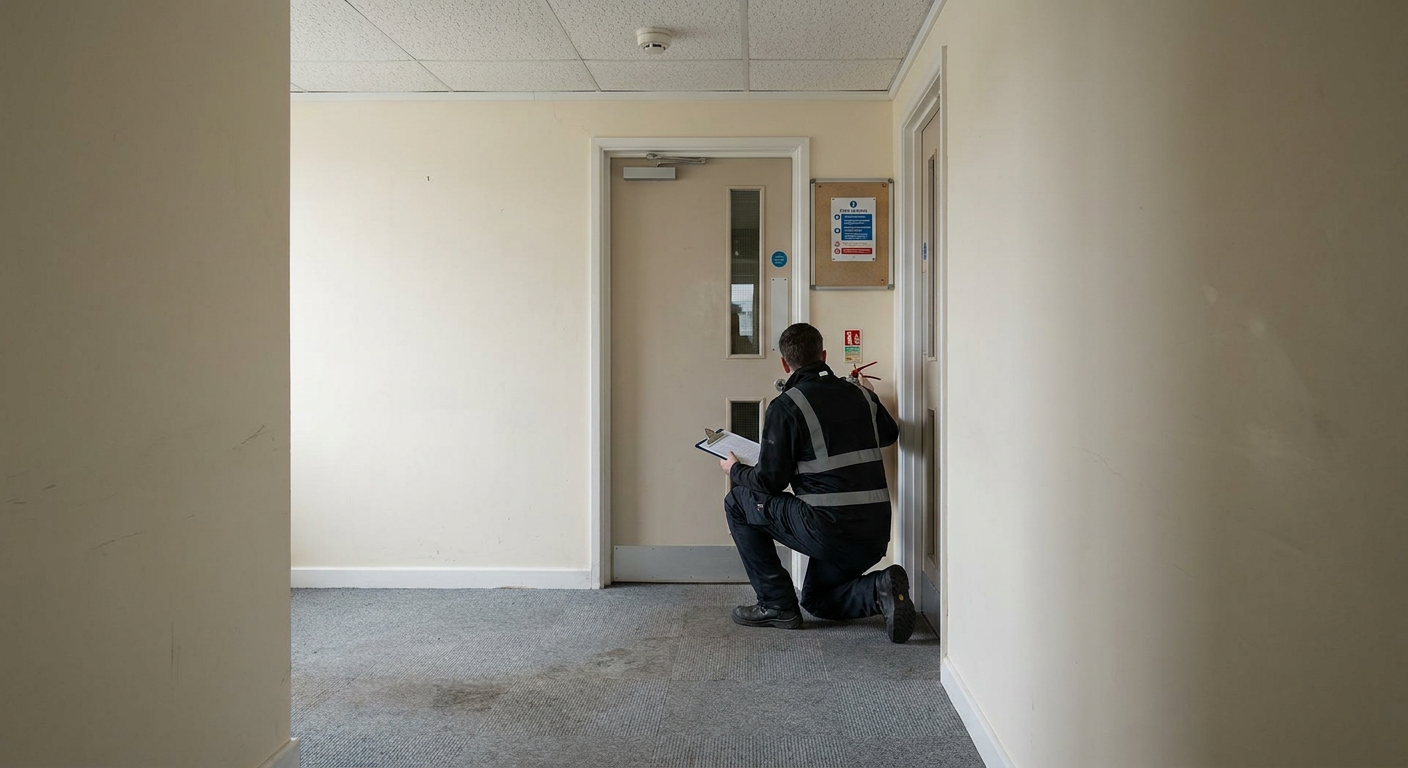
Sutton flats
Type 3 and type 4 fire risk assessments in Sutton flats
Send details about your building to find out which assessment type it needs. There is no charge for the initial enquiry, and you are not committing to any work by asking.
Why some Sutton blocks need more than a standard assessment
Most fire risk assessments in blocks of flats look only at shared areas. The assessor walks the corridors, stairwells, plant rooms and lobbies, checking escape routes, fire doors and alarm systems. This is known as a type 1 assessment, and it suits the majority of purpose-built blocks in Sutton where the walls between homes were built to resist fire.
Sometimes the history of a building makes a shared-area inspection insufficient. Older conversions, buildings where loft spaces have been turned into rooms, or blocks that have seen unrecorded alterations might have hidden weaknesses. When the person responsible for fire safety suspects the separation between individual flats and the common parts is compromised, they ask for an assessment that goes further. That is when type 3 and type 4 assessments come into the picture.
The difference between them comes down to access. Both look beyond the communal hallways, but they do so in different ways and for different reasons. Understanding which one a building actually needs prevents paying for intrusive work that was never required, or missing a problem that a surface-level check could not find.
What a type 3 fire risk assessment involves
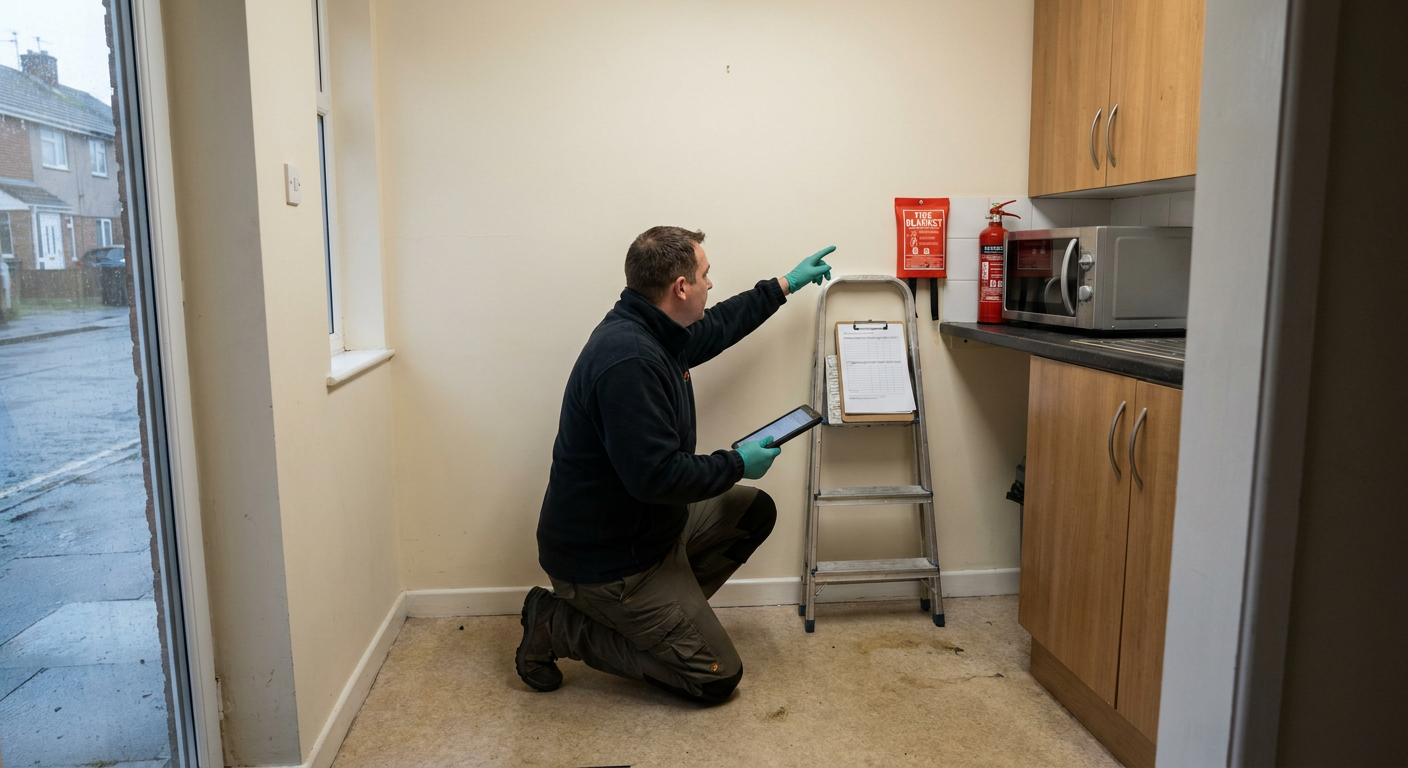
A type 3 assessment covers the shared parts of a building and includes a non-destructive look inside a sample of individual flats. The specialist firm carrying out the work enters selected homes to check the flat entrance doors, the layout of the hallway just inside, and any visible means of escape such as windows large enough to climb through.
This type does not involve opening up walls, lifting floorboards or pulling back ceilings. Everything observed must be visible without altering the fabric of the home. The assessor checks whether the front door has working self-closing devices and adequate seals, since a flat entrance door is often the final barrier keeping smoke out of the communal corridor.
Arranging access requires cooperation from residents. The responsible person must give notice, agree times with those living in the sampled flats, and ensure the assessor can enter without forcing anything. In Sutton, where many blocks are managed by resident associations or small landlords rather than large agencies, organising this access is often the most time-consuming part of the process. The actual inspection inside each flat is relatively quick because nothing is dismantled.
When a type 4 fire risk assessment is asked for
A type 4 assessment is the most thorough option available for existing blocks of flats. Like a type 3, it covers both the common parts and the inside of individual homes, but it adds destructive investigation. The specialist opens up concealed spaces to examine what lies behind plasterboard, above suspended ceilings and beneath raised floors.
This level of scrutiny is usually requested when there is genuine uncertainty about how well fire is contained within the structure. A building converted from a large house decades ago, before modern compartmentation standards applied, is a typical candidate. So is a block where previous owners carried out unapproved renovations, or where a recent incident revealed smoke travelling between flats through unexpected routes.
Because a type 4 assessment involves cutting into the building fabric, it requires careful planning. The specialist firm doing the work will agree exactly which areas are to be opened and how they will be made good afterwards. Residents whose homes are included in the sample must understand that panels will be removed and replaced. It is a disruptive process, so it is only commissioned when the potential risk justifies the intrusion.
Gaining access to homes for destructive inspection
Entering someone's home to cut into their walls is a serious matter. The law gives the responsible person certain duties regarding fire safety in shared buildings, but it does not grant an automatic right to force entry into privately owned or rented flats for a destructive survey.
In practice, the specialist arranging a type 4 assessment works closely with whoever manages the building to secure written consent from affected residents. Lease agreements sometimes contain clauses requiring owners to permit reasonable access for safety inspections, but relying on legal compulsion is a last resort. Most firms prefer to explain why the inspection is happening and what it involves, so residents feel informed rather than threatened.
For rented flats, the landlord or managing agent typically coordinates the visit. Tenants must receive proper notice. If a flat is empty, access is simpler, and assessors often target void properties where possible to reduce disruption. In Sutton blocks with a mix of leaseholders and tenants, coordinating a type 4 assessment takes longer than the physical work itself. Planning the sequence of visits and securing permissions is where most of the effort goes.
Deciding between type 3 and type 4 for your building
Choosing the right assessment depends on what is already known about the building. If the construction method is clear, the conversion history is documented, and previous inspections found no reason to doubt the walls and floors between flats, a type 1 or type 3 assessment is normally sufficient.
A type 4 becomes necessary when information is missing. Perhaps original building plans were lost, or several flats have changed hands many times with undocumented alterations. Maybe smoke from a small kitchen fire in one flat was detected two floors away, suggesting gaps in the separating structure. These are the situations where looking behind the surfaces is the only way to confirm whether fire will stay contained.
The specialist firm taking on the work will review whatever records exist before recommending a scope. They consider the age of the building, its construction type, and any specific concerns raised by residents or the local authority. Commissioning a type 4 assessment without cause wastes money and causes unnecessary stress for people living in the building. Getting advice early ensures the chosen approach matches the actual level of risk present.
Find out which assessment your building needs
Send a message describing your block of flats and any concerns you have noticed. The enquiry costs nothing and does not commit you to booking any work.
- No obligation
- Free initial advice
- Local knowledge