Sutton blocks
Fire safety regulations 2022: duties for flats
Send the details of your block to find out which duties apply by height. There is no charge for this initial advice, and nothing commits you to booking a specialist firm.
How building height changes the 2022 duties in Sutton
The fire safety regulations 2022 flats duties set specific obligations for anyone who owns or manages a block in Sutton. Those rules split buildings into groups based on height, and every block with two or more dwellings sharing common parts must have a valid [fire risk assessment](/fire-safety/fire-risk-assessment-sutton).
Which of the 2022 duties apply to your block depends entirely on its height. For any building over eleven metres, the responsible person must inspect flat entrance doors once a year and communal fire doors every three months. These 11 metre building fire duties catch many owners out when they assume only high-rise towers face extra rules. A converted house with four flats in Sutton falls under these requirements if its top floor sits above eleven metres from ground level.
Buildings over eighteen metres add more layers. The secure information box requirement applies here, along with monthly checks on lifts intended for use by firefighters. Wayfinding signage blocks need includes floor identification so crews can locate specific doors quickly. Specialist firms install this wayfinding signage to meet the exact specifications set out in the legislation.
Flat entrance door checks and what gets recorded
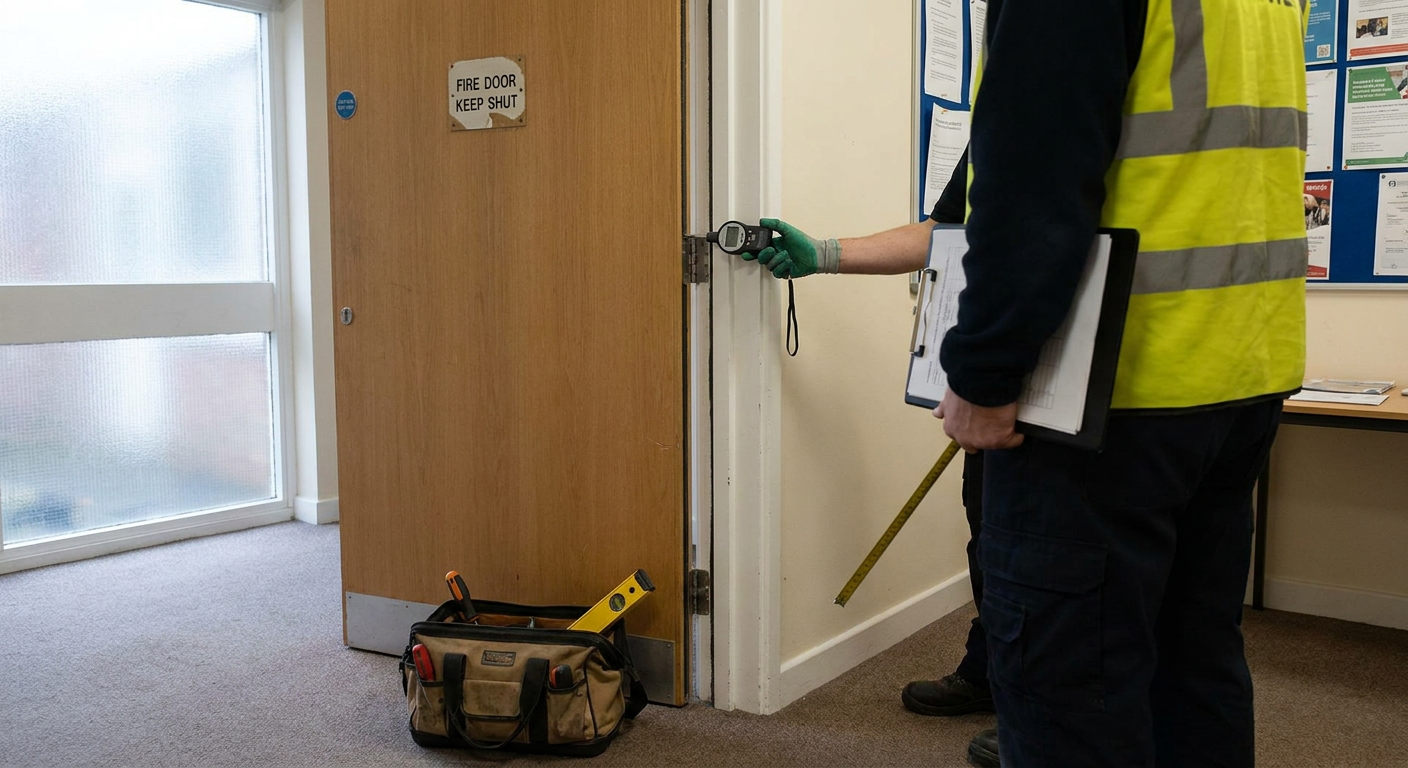
Under the flat entrance door checks rules, the responsible person must make best endeavours to check every door that separates a flat from a communal corridor or stairwell. For buildings over eleven metres, this happens at least once every twelve months. Communal fire doors need checking every three months regardless of whether the building reaches that height threshold.
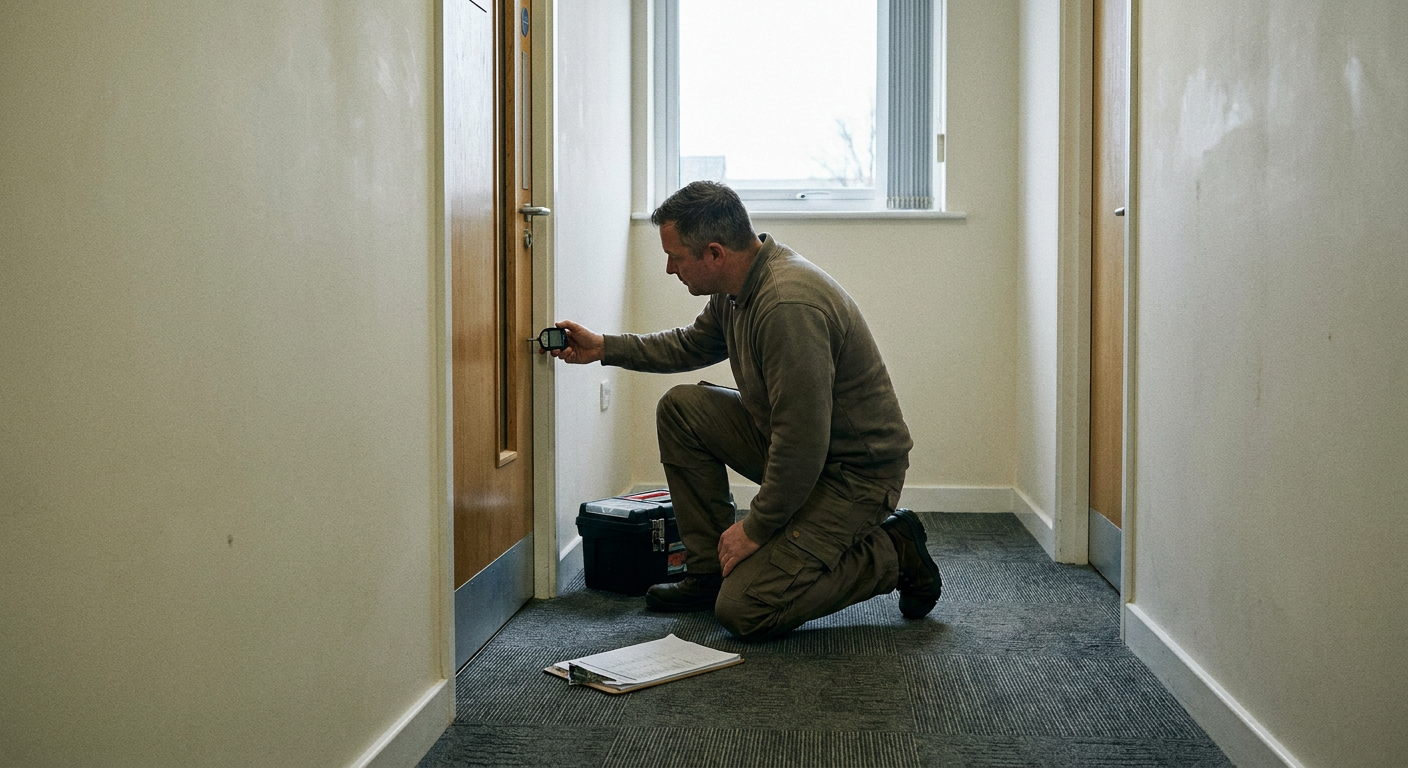
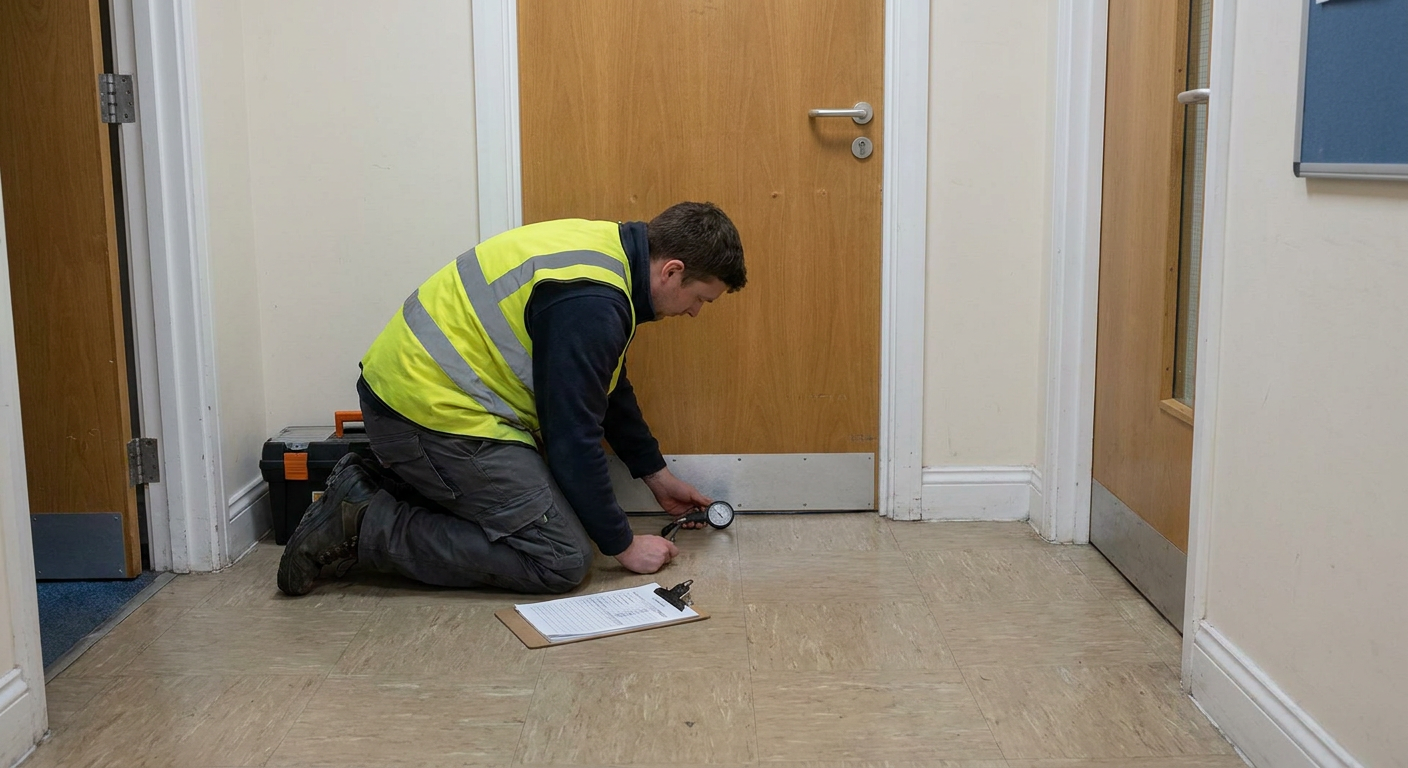
A check looks at the self-closing device, the gaps around the frame, the condition of intumescent seals and whether the hinges hold the leaf firmly. Read more about what is examined during a typical inspection on the page covering <a href="/duties/fire-doors-what-gets-checked">what gets checked on a fire door</a>. The specialist firm carrying out the work records each door individually, noting defects and assigning a priority for repair.
Fire door checks record keeping matters because an inspector from the local authority or fire service will ask for proof. A spreadsheet listing doors without individual condition notes rarely satisfies them. Proper records include photographs of defects, dates of inspection and the name of the person who looked at each door. Suttonfire takes enquiries from block owners across the borough who need this documentation compiled correctly, passing the work to firms experienced in multi-occupied residential buildings.
Resident fire safety information and annual notices
Every responsible person must provide resident fire safety information to occupants. This covers how the building's evacuation strategy works, where the assembly point is and what residents should do if they discover a fire. For blocks following a stay-put policy, the instructions must explain why remaining inside a unaffected flat is safer than entering smoke-filled corridors.
This information goes out when someone moves in and again at least once every twelve months. It does not need to be a lengthy document. A single sheet posted through each letterbox or handed over at the start of a tenancy meets the requirement, provided it names the responsible person and explains the escape routes clearly. More detail on planning those routes is available in the <a href="/fire-safety/fire-evacuation-plans-sutton">fire evacuation plans for Sutton</a> section.
If the building has changed its strategy, perhaps after a compartmentation survey revealed weaknesses, the updated instructions must go out promptly rather than waiting for the annual cycle. Managing agents in Sutton often handle this distribution alongside routine correspondence, but the legal duty remains with the responsible person even when an agent acts on their behalf.
Secure information boxes and wayfinding signage
The secure information box requirement applies to residential buildings over eighteen metres. It holds floor plans, details of firefighting equipment and contact numbers for the responsible person. Fire crews access it using a key they carry. The box must sit within reach of the main entrance, protected from weather and vandalism.
Wayfinding signage blocks need follows a similar height rule. Any residential building over eleven metres requires signs visible in low light or smoke that tell firefighters which floor they are on and which flat numbers sit behind each door. The signs use a standard format so crews from any station read them instantly.
Installing these signs falls to the responsible person or their appointed contractor. A specialist firm surveys the stairwells and landings, determines fixing positions and fits plates that meet the regulatory specification. In Sutton, older purpose-built blocks sometimes lack obvious mounting points, so the installer may need to drill into concrete cores. Suttonfire accepts enquiries about both the box and the signage, directing the physical installation to separate firms who carry out the work.
What these signs mean in your block
The same feature in two different buildings can mean entirely different things depending on height, age and layout. Here is what to look for and what usually settles the question.
- No sign above the stairwell door
- In blocks over eleven metres, wayfinding signs are required on every landing. Their absence suggests the duty has been missed. A specialist firm can survey and fit them.
- Metal box bolted outside the entrance
- This is likely the secure information box required for buildings over eighteen metres. Check it holds current floor plans and emergency contacts for fire crews.
- Flat door that does not close fully
- A faulty self-closing device compromises compartmentation. Under the 2022 rules, entrance doors in taller blocks must be checked annually. A fire door inspection settles this.
- No fire instructions in the hallway
- Residents must receive evacuation information yearly. Missing notices indicate the responsible person has not met this duty. Updated instructions should be distributed promptly.
Questions about the 2022 flat duties
Answers to what block owners in Sutton ask most. Send an enquiry for anything not covered here. Ask something else.
- Which of the 2022 duties apply to my block and does height change that?
- Height dictates everything. All blocks need a fire risk assessment. Those over eleven metres require annual flat entrance door checks and quarterly communal door inspections. Buildings over eighteen metres also need a secure information box and monthly lift checks.
- How often do I have to check flat entrance doors and communal doors?
- Flat entrance doors in blocks over eleven metres must be checked every twelve months. Communal fire doors require inspection every three months. Both checks look at seals, hinges, gaps and self-closing devices.
- What information do I have to give residents each year?
- You must provide written instructions explaining the building's evacuation strategy, the location of exits and what to do if a fire starts. Issue this on move-in and repeat it at least once every twelve months for all occupants.
- Do we need a secure information box and where should it go?
- A secure information box is required for residential buildings over eighteen metres. It sits near the main entrance, accessible to fire crews. Inside, keep current floor plans, details of firefighting systems and contact numbers for the responsible person.
- What wayfinding signage is needed and who installs it?
- Blocks over eleven metres need floor and flat identification signs on every landing, visible in smoke. A specialist fire safety firm measures the stairwells and fixes compliant plates. The responsible person arranges and pays for the work.
- How do I record the door checks so an inspector accepts them?
- Keep a log showing the date, the specific door, the condition of seals, hinges, gaps and closers, plus photographs of any faults. Name the person who carried out the check. Generic statements without individual door data will not satisfy enforcement officers.
- Does this apply to a converted house with four flats in Sutton?
- Yes, if it contains two or more dwellings sharing common parts. The eleven-metre rule still triggers door checks if the top floor exceeds that height. Measure from ground level to the floor of the highest occupied storey.
- Can you carry out the door checks for us as the managing agent?
- Suttonfire takes enquiries from managing agents and passes the inspection work to separate specialist firms operating in Sutton. Those firms examine the doors, compile the records and advise on repairs. Send the details of your block to begin.
Get clarity on your block's duties
Send the height and address of your Sutton block. A specialist firm reviews the details and confirms which 2022 regulations apply. This initial advice costs nothing and carries no obligation to book further work.
- No cost for initial advice
- Clear answer by height
- No obligation to proceed