
Shared houses in Sutton
HMO fire risk assessment in Sutton
Send details of your shared house to find out what the risks are and what the licensing officer expects. The enquiry is free and does not commit you to booking anything.
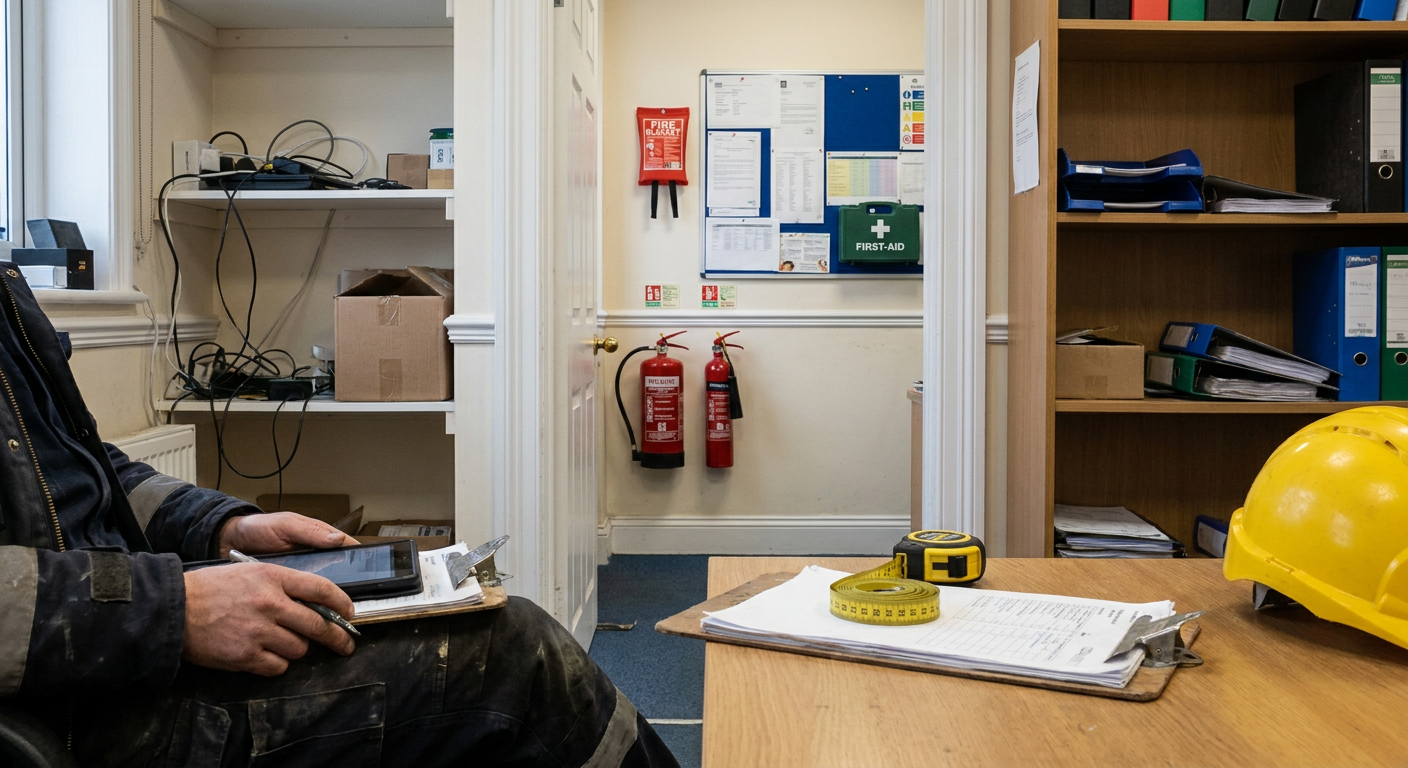
Why a shared house needs its own assessment
A shared house is not a single family home, and the law treats it differently. If you manage rooms let to separate tenants in Sutton, you need an hmo fire risk assessment sutton to understand where the hazards sit. That applies whether the council requires a licence or not.
Many landlords assume that because their property has fewer than five occupants, the rules do not apply. They do. A fire assessment shared house sutton covers the same ground as one for a larger building: escape routes, alarm coverage, door standards and the condition of shared spaces. The difference is scale, not obligation.
Licensing officers look at specific things when they review an application. They want to see that the person responsible for the building understands the risks and has a plan to manage them. An up-to-date report gives you that evidence. Without it, a licence can be delayed or refused, and the council can take enforcement action if conditions deteriorate. Read more about [HMO licence fire safety conditions in Sutton](/duties/hmo-licence-fire-conditions-sutton) to see what officers expect.
Alarm grades for three-storey shared houses
Sutton council follows national guidance on alarm systems, but the grade they accept depends on the size and layout of the house. For a typical three-storey shared house, the expectation is usually a shared house fire alarm grade d system. This means mains-powered detectors with battery backup, interlinked so that a fire detected in one room sounds the alarm everywhere.
Grade D covers most standard HMOs. Larger buildings, or those with higher risk layouts, may need Grade A panels with separate zones. The specialist who visits will look at the number of storeys, the travel distance to the final exit and whether any rooms open directly onto the staircase. Those factors determine which grade keeps people safe and satisfies the council.
Detectors must be placed in every bedroom, the hallway on each floor, and any communal living space. Kitchens usually require heat detectors rather than smoke heads to avoid false alarms. The assessor records what is already installed and notes where gaps exist. If you want to understand the wider process, [how to arrange a fire risk assessment in Sutton](/duties/arranging-an-assessment-sutton) explains the steps from first contact to receiving the report.
Bedroom doors and the fire door standard
The question comes up constantly: do bedroom doors in a Sutton HMO need to be fire doors with closers? In most licensed houses, yes. The hmo fire door standard landlord obligations refer to is typically FD30S, meaning the door resists fire for thirty minutes and carries intumescent strips and cold smoke seals around the edges.
Self-closing devices are part of that standard. A fire door left wedged open does nothing during a fire. The specialist checks hinges, gaps around the frame, glazing and whether the closer shuts the door fully into the rebate every time. Doors that fail these checks get recorded as actions.
Not every internal door needs upgrading. Cupboards in corridors might, depending on what they store. Bathroom doors generally do not. The report distinguishes between what is required by the licence conditions and what is good practice. If you suspect your doors have problems, a [fire door inspection in Sutton](/fire-safety/fire-door-inspection-sutton) examines gaps, seals and hinges individually.
Escape routes that pass through kitchens
If the only way out of a shared house runs through the kitchen, the assessor will flag it. Kitchens are where most domestic fires start, so routing an escape path through one increases the chance that smoke or flames block the exit before tenants reach it. That does not mean the building automatically fails. It means the risk needs managing. Sometimes a second exit exists but has been blocked by furniture or storage. In other cases, upgrading the alarm system to give earlier warning compensates for the layout. The specialist looks at travel distances, the width of passages and whether doors along the route open in the direction of escape. They also check that emergency lighting covers the path if the power fails. How these routes work together is covered in [fire evacuation plans in Sutton](/fire-safety/fire-evacuation-plans-sutton), which map the journey from any room to a place of safety.
Unlicensed houses and legal obligations
A common misunderstanding is that a house with four tenants does not need an assessment because it falls below the mandatory licensing threshold. The Regulatory Reform (Fire Safety) Order 2005 applies to the common parts of any house in multiple occupation, regardless of size. So does the Housing Act 2004, which gives councils the power to inspect any rented property.
Sutton council can request evidence of a fire risk assessment for any shared house if they receive a complaint or conduct an audit. Having one ready prevents delays. It also protects you if something goes wrong, because it shows you considered the risks and took reasonable steps to address them.
The scope of the assessment does not shrink just because the building is smaller. Escape routes, alarms, doors and management procedures still matter. Landlords operating near the borough boundary should note that neighbouring areas follow the same legislation. Properties in [Mitcham](/london-and-surrey/mitcham) or [Croydon](/london-and-surrey/croydon) face identical requirements.
What the visit involves and tenant access
When you ask how soon someone can visit, the answer depends on current demand across Sutton, but the specialist firm aims to schedule within days rather than weeks. Urgent cases, such as those prompted by an enforcement letter, often move faster.
Tenants do not all need to be home. The assessor needs access to the common parts: hallways, landings, staircases, shared kitchens and bathrooms. Individual bedrooms require access too, to check detection, door condition and window openings for secondary escape. If a room is locked and the tenant is out, the assessor notes it as a limitation in the report and recommends a follow-up.
The visit itself takes a few hours for a standard shared house. The assessor walks the building, tests alarm points where possible, measures door gaps and photographs issues. Afterwards, they compile the findings into a written document. If you have received correspondence from the council already, read what to do about a [fire safety enforcement letter](/duties/enforcement-letter) before the visit.
Prioritising the works the report lists
Every report produces actions. Some are urgent, some are improvements that can wait until the next maintenance cycle. The specialist separates these clearly. Immediate risks, like a missing self-closer on a door protecting the only staircase, go at the top. Longer-term items, like upgrading older but functional detection heads, sit lower down.
This prioritisation matters because landlords need to budget. It also matters for licence applications. Sutton council wants to see that critical items are resolved before they grant or renew a licence. Less urgent recommendations can be addressed within agreed timescales, provided the overall risk remains acceptable.
The report is a working document. It should be reviewed annually or whenever the building changes, such as new tenants moving in, alterations to the layout or updated guidance. Keeping track of [review dates for fire risk assessments](/duties/review-dates) ensures the document stays valid. If the building has hidden voids or complex partitions, a [compartmentation survey in Sutton](/fire-safety/compartmentation-survey-sutton) may be recommended alongside the main assessment.
Related services for shared houses
These services support landlords managing fire safety in shared accommodation across Sutton and nearby areas.
Fire Risk Assessment
The core inspection for any shared house, licensed or not.
Fire Door Inspection
Checks gaps, seals and closers on individual doors throughout the building.
Health and Safety Reports
Broader reports covering general hazards alongside fire risks for landlords.
Fire Safety Policy
Written procedures for managing fire safety day to day in shared houses.
Evacuation Plans
Drawn escape routes showing how tenants leave the building safely.
Licensed versus unlicensed shared houses
Both types require fire precautions, but the level of scrutiny differs when applying for or maintaining a licence in Sutton.
| Licensed HMO (five or more) | Unlicensed HMO (four or fewer) | |
|---|---|---|
| Alarm expectations | Licensed HMO (five or more)Usually Grade D LD2 minimum, sometimes Grade A for larger layouts. | Unlicensed HMO (four or fewer)Often Grade D LD3, though council discretion applies based on risk. |
| Door standards | Licensed HMO (five or more)FD30S with self-closers enforced strictly on all relevant doors. | Unlicensed HMO (four or fewer)Same standard applies legally, but inspection frequency is lower. |
| Council involvement | Licensed HMO (five or more)Licence conditions specify exact requirements and deadlines. | Unlicensed HMO (four or fewer)No routine licence checks, but complaints trigger inspections. |
| Report use | Licensed HMO (five or more)Submitted with the licence application as proof of compliance. | Unlicensed HMO (four or fewer)Held by the landlord to demonstrate duty of care if challenged. |
A specialist determines which measures suit your building after inspecting the layout and occupancy.
Ask about your shared house in Sutton
Send details of your property and what concerns you. The enquiry goes to a specialist firm who handles fire risk management in Sutton. There is no fee for asking and no obligation to proceed.
- No charge to enquire
- Local specialists respond
- No commitment required