
Sutton
Fire extinguisher testing in Sutton
Send the details of your building to find out what maintenance your equipment needs. A specialist firm will review the information and advise on the right schedule, with no obligation or fee for the initial enquiry.
Monthly checks or a full annual service
Both tasks keep equipment ready. They happen at different intervals and involve different levels of detail.
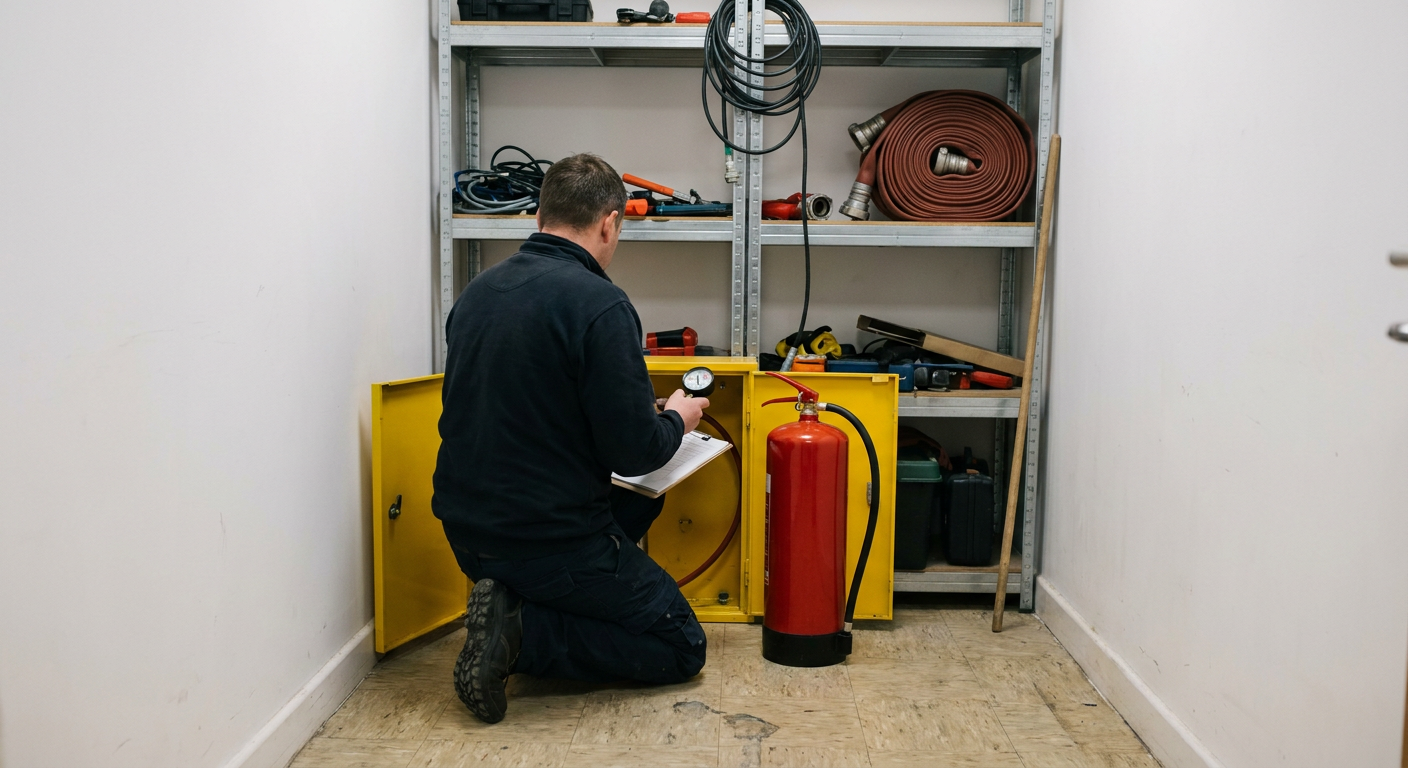
Who does it
- Monthly visual check
- The responsible person or a nominated staff member.
- Annual service by a specialist
- A competent technician from a specialist firm.
What happens
- Monthly visual check
- A look at the gauge, pin, seal and outer body for obvious damage.
- Annual service by a specialist
- Weighing, internal inspection where needed, discharge test and refilling.
Record keeping
- Monthly visual check
- Noted in a logbook kept near the fire safety policy.
- Annual service by a specialist
- A dated service label fixed to each unit and a certificate issued.
When it is due
- Monthly visual check
- Every month without fail.
- Annual service by a specialist
- Once every twelve months from the last recorded service date.
A specialist advises which type of servicing suits the premises after looking at the layout and risks.
Fire safety equipment testing and maintenance advice
Maintaining extinguishers sits alongside other scheduled checks that a specialist firm handles across Sutton buildings.
- Extinguisher servicing in Sutton A technician examines each unit, replaces worn parts and confirms the pressure holds. This covers water, foam, powder and CO2 types used in shops and offices.
- Fire alarm testing intervals in Sutton Weekly manual call point tests run alongside periodic inspections of panels and sounders to confirm the detection system operates as designed.
- Emergency lighting test schedule Short functional tests happen monthly, with a full duration discharge carried out annually to prove the batteries hold their charge during a power cut.
- Equipment placement and selection A specialist reviews the floor plan to confirm the correct extinguisher types for offices and retail spaces, mounted at the right height near exits.
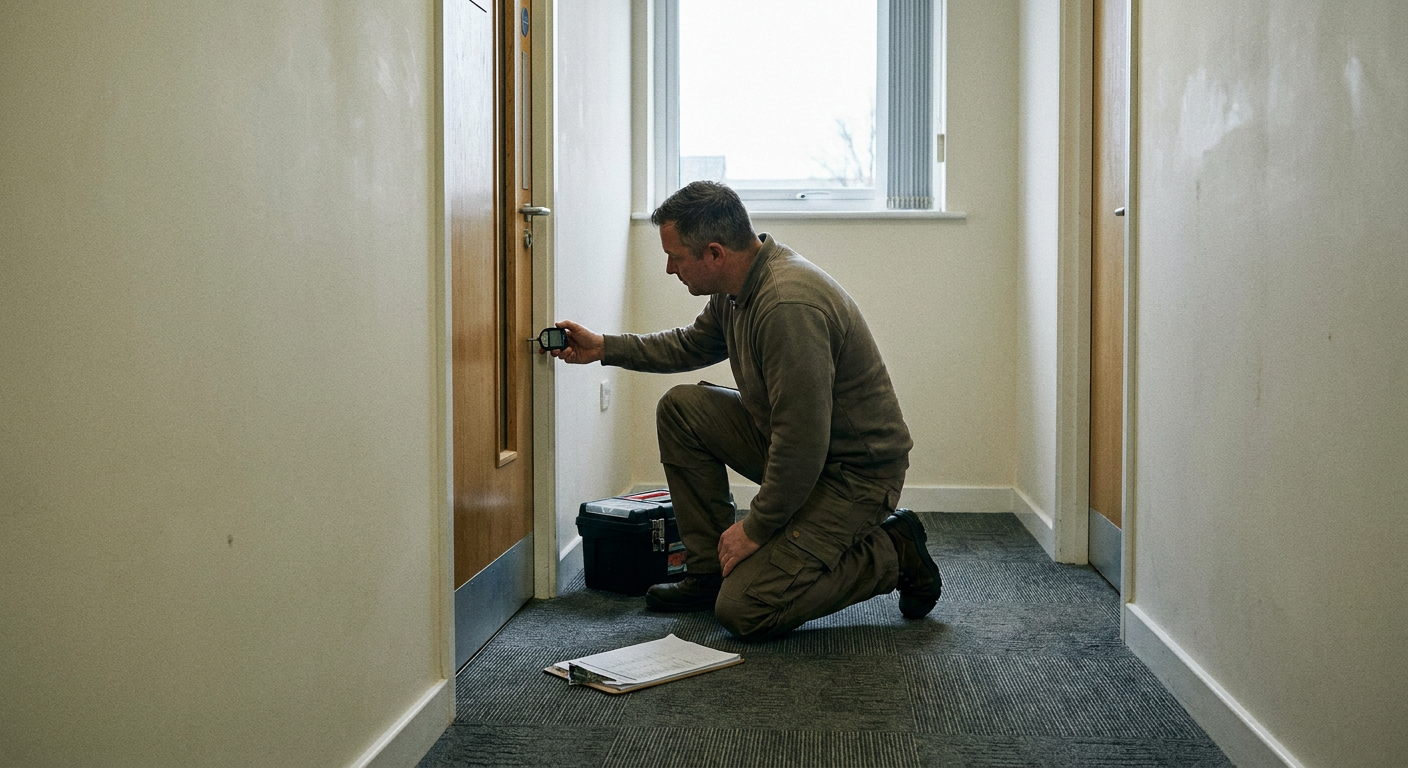
Stages of an extinguisher service visit
A service visit follows a set sequence so every unit receives the same level of attention.
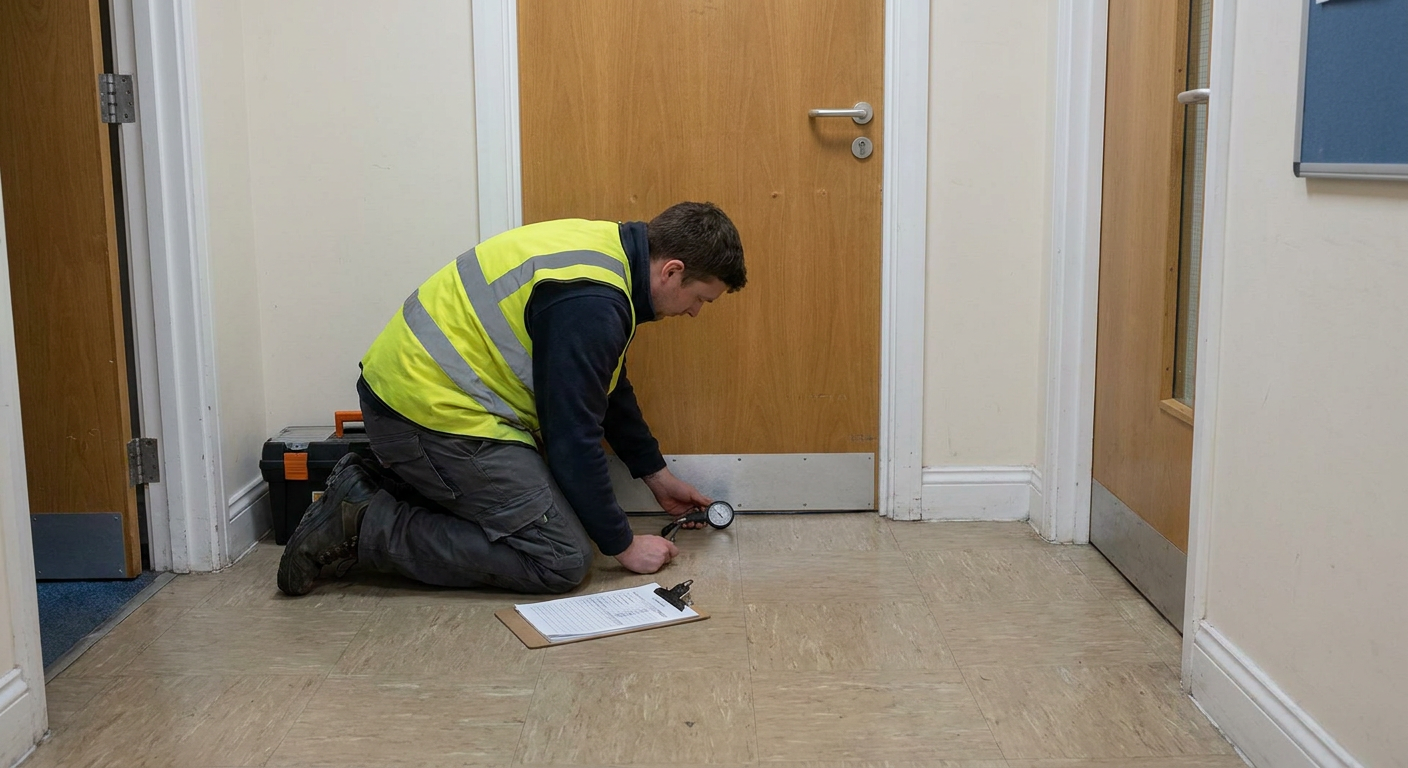
Site arrival and briefing
The technician confirms access to all areas and notes any units blocked by stock or furniture.
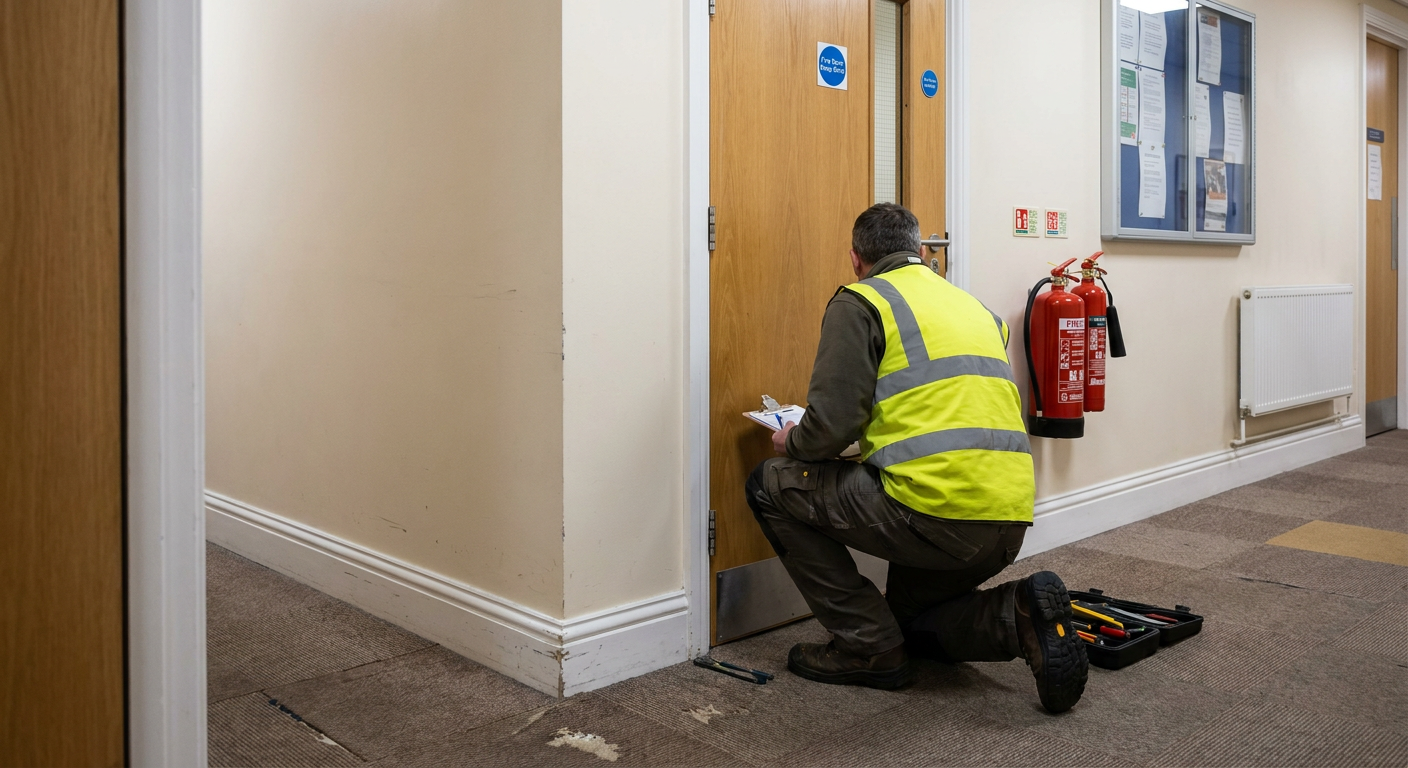
Physical inspection
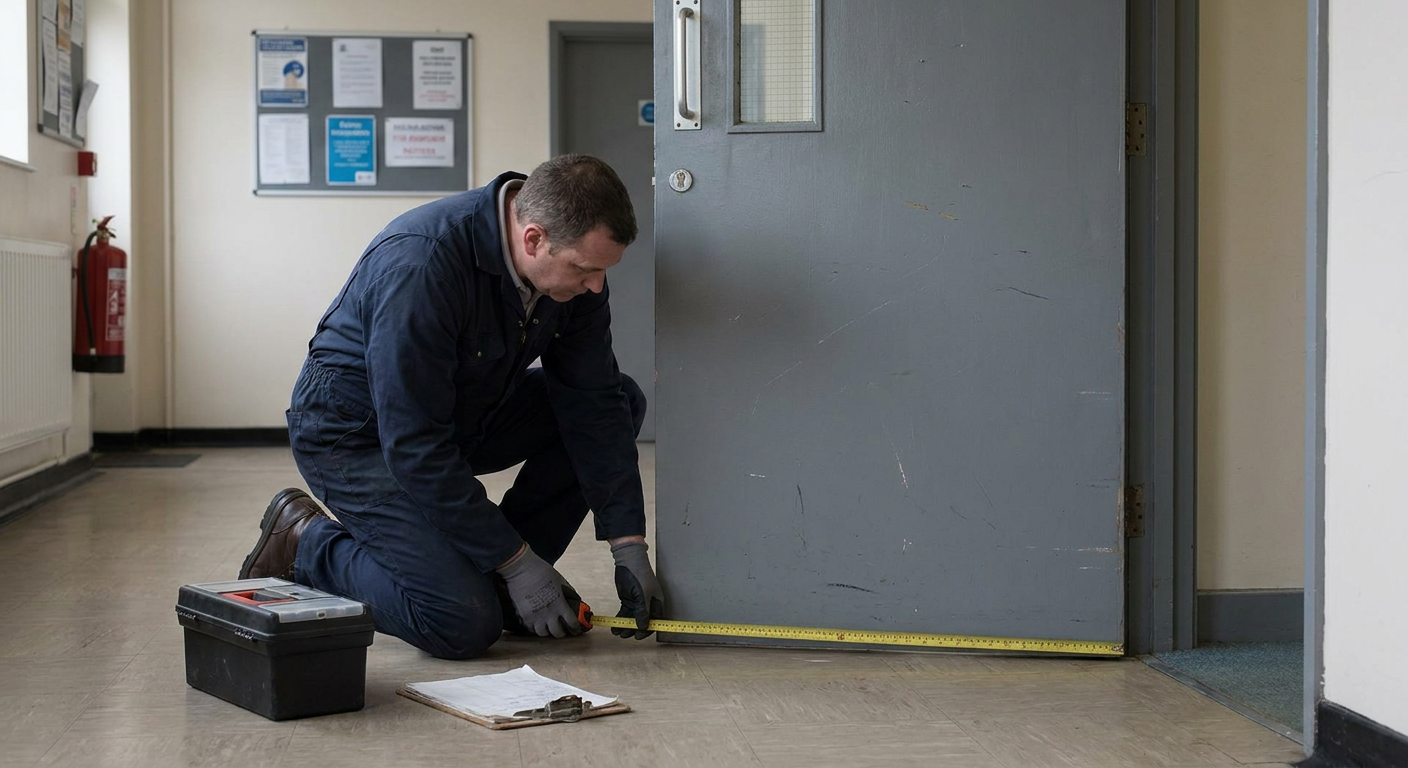
Each extinguisher is weighed, checked for corrosion and examined for intact seals and readable labels.
Testing and refilling
Discharge tests or extended pressure testing happens where due, followed by refilling and resealing.
Labelling and reporting
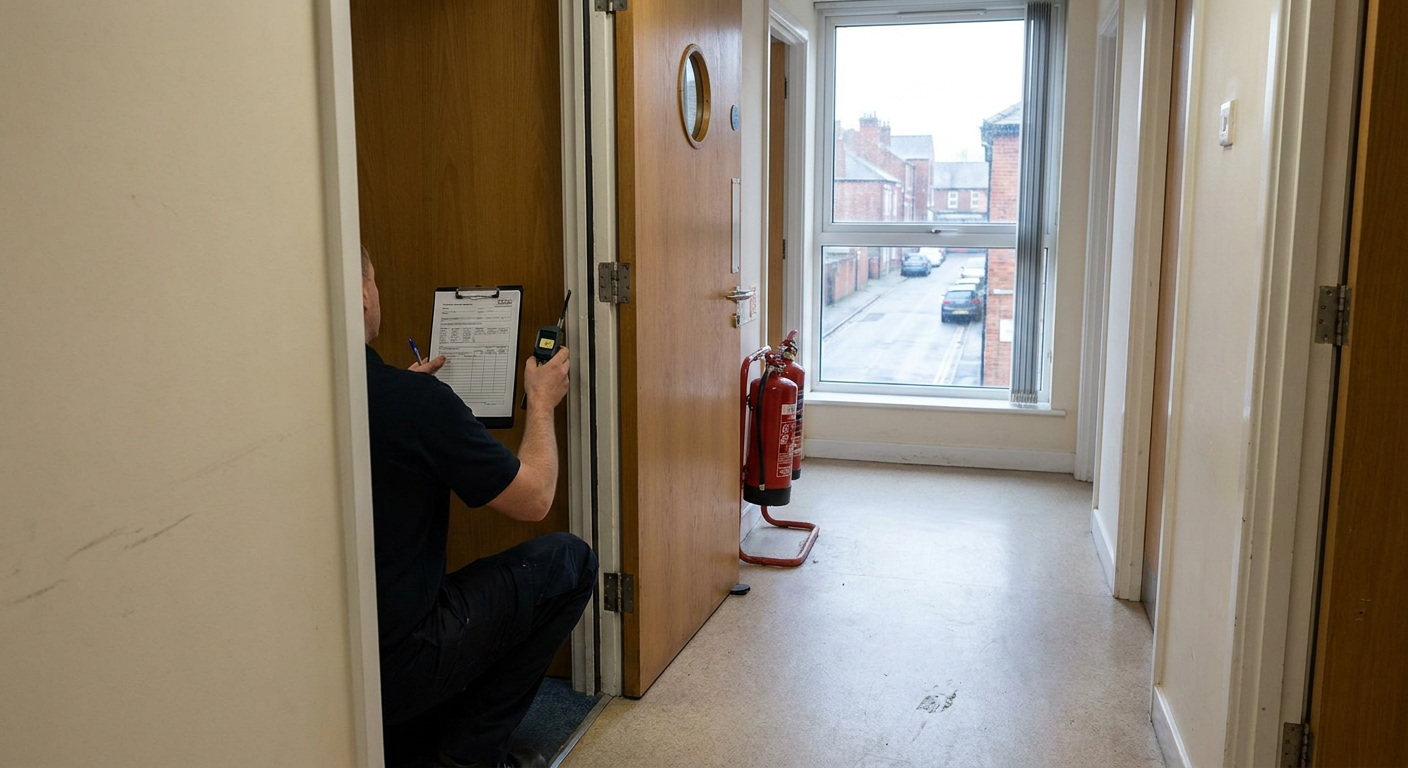
New service labels are applied and a written report lists any units condemned or replaced.
Checks made during equipment maintenance
The order matters because a failed early check can condemn a unit before further work begins, saving time and avoiding unsafe handling.
-
External condition
The technician looks for dents, rust or paint damage that weakens the cylinder body. Severe corrosion means immediate condemnation rather than further testing.
-
Pressure and weight
Gauge readings and physical weighing confirm the contents match the factory specification. A drop indicates a slow leak requiring repair or replacement.
-
Hose and nozzle
Blockages or perished rubber prevent proper discharge. The technician clears debris or fits new parts to ensure the agent flows freely when needed.
-
Service history label
Past dates determine whether basic servicing is enough or if extended pressure testing is now legally due based on the manufacture year.
Units failing any stage are removed from service immediately and listed as condemned on the final report.
Questions about extinguisher maintenance
How often should extinguishers in my Sutton building be serviced?
British Standards require a basic service every twelve months by a competent technician. Extended servicing or pressure testing happens at five or ten year intervals depending on the extinguisher type. Monthly visual checks fall to the responsible person.
What differs between the monthly check and the annual service?
The monthly check is a visual inspection of the gauge, pin and body for damage. The annual service involves weighing, detailed examination and replacing worn components. Only a trained technician performs the annual work.
My extinguishers have no service label. Do they need replacing?
No label means there is no proof of maintenance. A specialist examines them to decide if they can be tested and returned to service or must be replaced entirely. Never leave unlabelled units in place.
How many extinguishers do I need in a small shop?
The number depends on floor area and specific hazards present. A specialist calculates coverage based on British Standard ratings, usually placing units near exits and high risk points like till areas or storage rooms.
Does servicing cover the fire alarm and emergency lighting too?
No. Extinguisher maintenance is separate from fire alarm testing intervals in Sutton or the emergency lighting test schedule. Each system requires its own inspection regime, though a single specialist firm often handles all three during one visit.
Will an assessor flag missing equipment on the report?
Yes. During a fire risk assessment in Sutton, the assessor records absent, expired or unsuitable extinguishers as findings. The report then specifies remedial actions required to comply with fire safety legislation.
How disruptive is a service visit to a busy premises?
Disruption is minimal. The technician works through units one at a time, leaving remaining equipment in place. A small shop takes under an hour, while larger office floors may need half a day.
What is extended service and when is it due?
Extended service involves a full discharge, internal examination and refill. Water and foam units require it every five years. Powder and CO2 extinguishers follow different schedules, typically at ten years, verified against the manufacture date.
Areas covered for equipment maintenance
Enquiries about fire safety equipment testing and maintenance advice in Sutton come from buildings across the borough and neighbouring towns. Specialist firms travel throughout this area to carry out scheduled servicing.
If your street falls outside these towns, send an enquiry anyway, as coverage often extends further.
- Fire safety equipment testing and maintenance advice Mitcham
- Fire safety equipment testing and maintenance advice Thornton Heath
- Fire safety equipment testing and maintenance advice New Malden
- Fire safety equipment testing and maintenance advice Epsom
- Fire safety equipment testing and maintenance advice Tooting
- Fire safety equipment testing and maintenance advice Beddington Corner
- Fire safety equipment testing and maintenance advice Ewell
- Fire safety equipment testing and maintenance advice Colliers Wood
- Fire safety equipment testing and maintenance advice Wimbledon
- Fire safety equipment testing and maintenance advice Croydon
- Fire safety equipment testing and maintenance advice Waddon
Ask about maintaining your equipment
Send the details of your building and the equipment you currently have. A specialist firm will review the information and suggest a maintenance plan. There is no charge for this initial step and no commitment to proceed.
- No obligation to proceed
- Free initial review
- Local specialists only