
Sutton student housing
Student accommodation fire safety in Sutton
Send details about your halls, shared house or purpose built block. A specialist firm will review the layout and tell you what is needed before term starts. There is no charge for this first step.
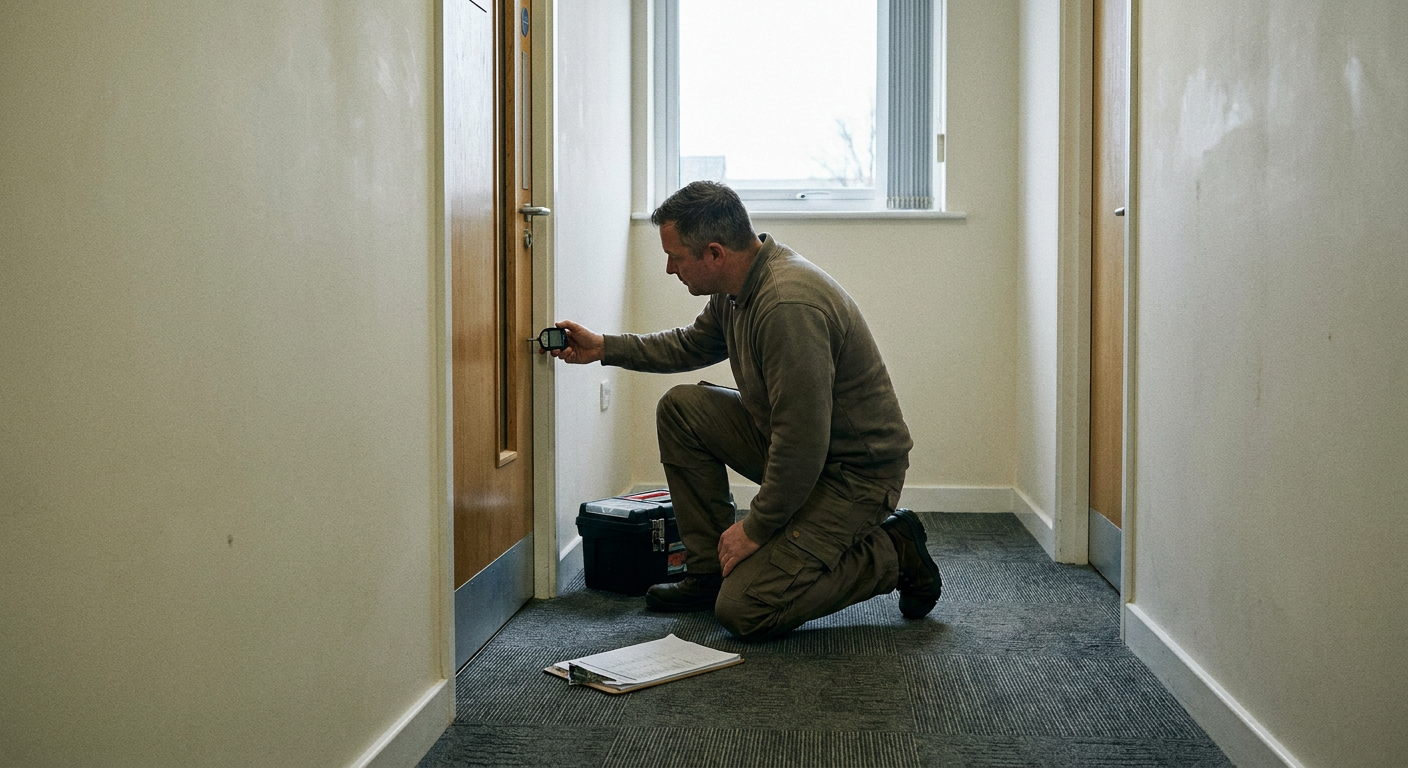
Timing a student halls fire safety inspection around term dates
A student halls fire safety inspection can happen while students are in residence or during the summer break. Assessing over the summer means empty corridors and kitchens, so the specialist moves through the building without disturbing anyone. But some hazards only appear when the building is full: blocked exits, overloaded sockets, bins left in stairwells.
Many providers in Sutton schedule the main assessment before September and then run checks once term begins to catch new habits. [Arranging an assessment](/duties/arranging-an-assessment-sutton) early gives time to act on the findings before freshers arrive. If the building has changed use since the last review, or if the council has written to ask questions, waiting until summer may leave too little margin.
The responsible person decides the timing based on when contractors can access rooms and when records need updating. The specialist firm carries out the work whenever the building is ready.
Shared kitchens and repeated false alarms
Kitchen false alarms from student kitchens are one of the most common complaints in shared accommodation. Toast, burnt pans and steam from kettles trigger detectors that were specified for a corridor rather than a cooking space. When alarms sound every morning, residents start ignoring them or covering detectors with bags.
Reducing these false alarms usually involves checking whether the right type of detector sits near the cooking area. Heat detectors respond to temperature rises rather than smoke, so they tolerate normal cooking better. The specialist inspects the existing system and notes where replacements or repositioning would help.
Ventilation matters as much as detection. Extractor fans that do not clear steam quickly enough leave moisture drifting into hallways. A [fire risk assessment](/fire-safety/fire-risk-assessment-sutton) covers both the alarm specification and the physical conditions that cause nuisance activations. Management practices, such as cleaning filters and reminding residents to use lids, also form part of the recommendations.
What records providers are asked to produce
When an inspector or the local authority asks for purpose built block fire records, they want proof that duties have been met consistently. The core document is the current fire risk assessment, along with evidence that its action points have been addressed.
Providers should also hold a written [fire safety policy](/fire-safety/fire-safety-policy-and-procedures-sutton) that explains who does what during an emergency. Maintenance logs for alarms, emergency lighting and extinguishers show that equipment has been tested at the required intervals. Records of any [compartmentation survey](/fire-safety/compartmentation-survey-sutton) confirm that hidden gaps behind walls or above ceilings have been checked.
Training certificates matter too. If staff have attended sessions, the dates and names go on file. For buildings that fall under the Fire Safety England Regulations 2022, additional information about external walls and flat entrance doors must be available. Keeping these documents in one place saves time when someone asks to see them.
Warden training for resident and night staff
Resident wardens and night porters are often the first people awake when an alarm sounds. Whether formal [fire warden training](/fire-safety/fire-warden-training-sutton) is required depends on the role each person plays during an evacuation. Staff who direct others to exits, check floors or call the fire service carry duties that go beyond basic awareness.
A training session covers how to read the alarm panel, when to evacuate versus when to investigate, and how to assist residents with limited mobility. It also addresses the specific risks of student housing: late-night social events, unfamiliar visitors and high turnover of occupants who have never practised an escape route.
Even where a full warden course is not mandated, [awareness training](/fire-safety/fire-safety-awareness-training-sutton) ensures every member of staff knows the building's plan and their part in it. The specialist firm delivers the training on site so that the routes discussed match the actual corridors and stairs.
Running evacuation drills each academic year
Students arrive in September with no memory of the building's layout. A [fire drill in student accommodation](/fire-safety/fire-evacuation-plans-sutton) early in the term establishes the escape route before anyone has to use it in panic. Running one drill a year satisfies many providers, but halls with short-stay language students or frequent mid-year arrivals may need more.
The drill tests whether alarms are audible in every room, whether exits open freely and whether assembly points hold everyone safely away from traffic. It also reveals practical problems: students who cannot hear the alarm over music, doors propped open for convenience, or signage that means nothing to someone reading English as a second language.
After each drill, the results feed back into the assessment. If evacuation took too long, the [evacuation plan](/fire-safety/fire-evacuation-plans-sutton) may need adjusting. Recording the date, duration and any issues found keeps the provider on the right side of enforcement.
HMO status for shared student lets in Sutton
A house rented to six students who share a kitchen and bathroom is a house in multiple occupation. That classification brings specific fire safety duties under the Housing Act and the Regulatory Reform Order. The local authority in Sutton sets licence conditions that dictate alarm grades, door standards and escape lighting.
Smaller shared student lets of three or more unrelated people also meet the HMO definition, even if they do not require a mandatory licence. In every case, a [shared student let fire assessment](/fire-safety/hmo-fire-risk-assessment-sutton) examines the means of escape, the separation between rooms and the condition of [fire doors](/fire-safety/fire-door-inspection-sutton).
Landlords sometimes assume that because tenants are students rather than families, the rules are relaxed. They are not. The same standards apply, and enforcement letters arrive just as quickly. Checking [licence conditions](/duties/hmo-licence-fire-conditions-sutton) before signing tenancy agreements prevents costly retrospective work.
Assessing a sixty-room purpose built block
A purpose built block with sixty rooms takes longer to assess than a converted house because there are more doors to check, more floors to walk and more plant rooms to inspect. The specialist typically needs a full day on site, plus time afterwards to write up the report.
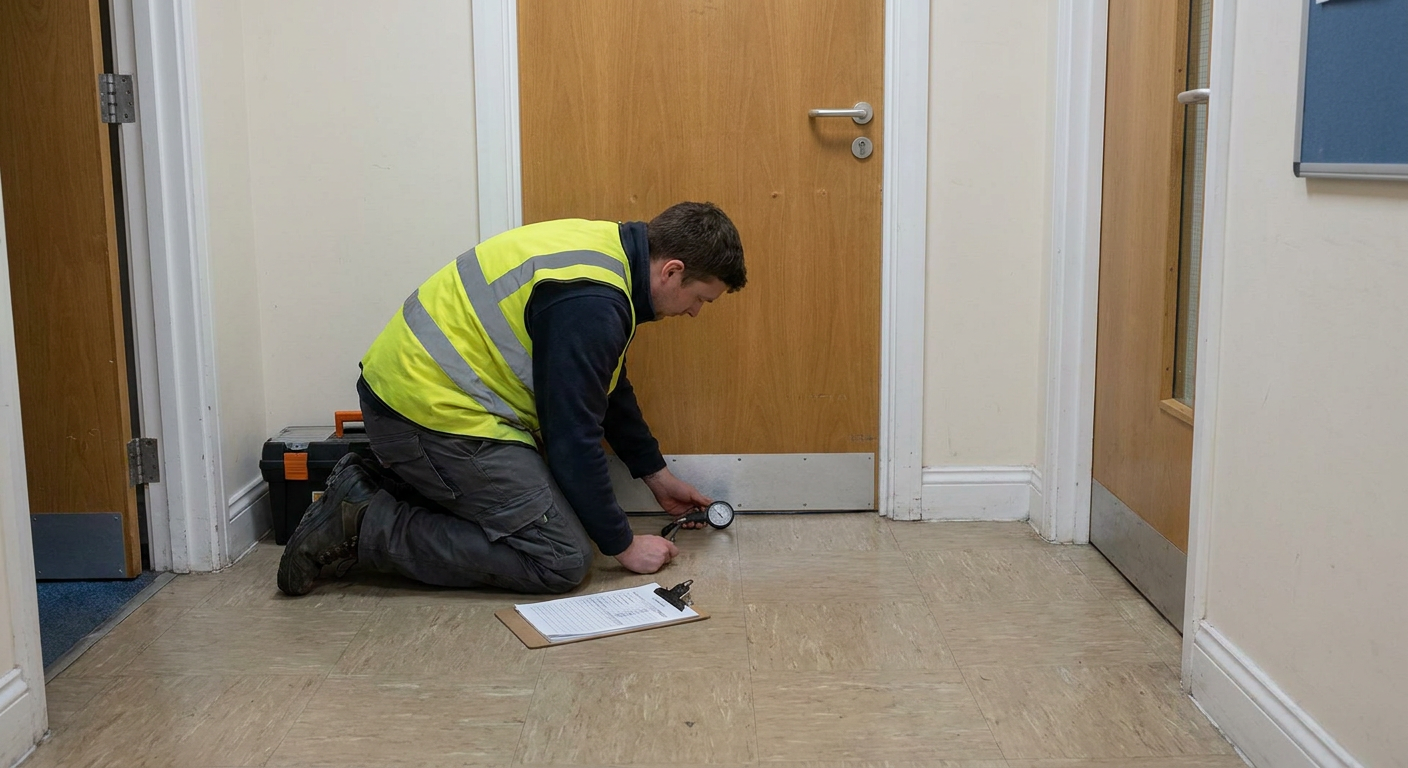
The process follows a set path: external walls, communal lobbies, staircases, risers, individual room doors and finally the roof voids. Each [fire door](/duties/fire-doors-what-gets-checked) is measured for gaps, checked for intumescent seals and tested to see whether the closer shuts it fully. Alarm call points are pressed, emergency lights simulated and extinguishers dated.
Access to every room matters. If some students are away or refuse entry, those rooms get noted as uninspected and the assessment flags them for follow-up. [Arranging access](/duties/arranging-an-assessment-sutton) well in advance avoids a second visit. Once the site work finishes, the written report arrives within days, listing actions by priority.
Services for providers
Fire safety services for student housing in Sutton
- Fire Risk Assessment
- A specialist examines the building, identifies hazards and writes a report with prioritised actions for the provider to follow.
- Fire Door Inspection
- Every door protecting an escape route is checked for gaps, seals, hinges and closing force by a specialist firm.
- Compartmentation Survey
- Hidden voids and walls between rooms are inspected to confirm that fire and smoke cannot spread unseen through the structure.
- Evacuation Plans
- Clear written procedures showing how residents and staff leave the building and where they gather outside safely.
- Warden Training
- On-site sessions delivered by a specialist so resident staff know how to respond when an alarm sounds at night.
- Extinguisher Testing Advice
- Guidance on which extinguishers suit communal kitchens and laundries, and how often a competent person should check them.
Term-time or summer: when to book the assessment
Both windows work, but they reveal different things about how the building behaves when occupied.
Access to rooms
- Summer vacation
- Empty rooms allow full inspection without disturbing residents.
- During term time
- Some rooms may be locked or occupied, requiring return visits.
Visible hazards
- Summer vacation
- Blocked exits and overloaded sockets are absent when halls are empty.
- During term time
- Real daily habits like propped doors and bin storage are visible.
Alarm testing
- Summer vacation
- Testing causes no disruption to sleep or study schedules.
- During term time
- False alarms affect studying students and may cause complaints.
Staff availability
- Summer vacation
- Fewer wardens on site to answer questions about procedures.
- During term time
- Full staffing allows the specialist to observe actual responses.
A specialist advises which timing suits after reviewing the building's size and occupancy pattern.
Ask about your student accommodation
Send the address, building type and number of rooms. A specialist firm reviews the details and replies with what is needed next. Sending an enquiry does not commit you to booking any work.
- No obligation to proceed
- Free initial review
- Local to Sutton