Sutton fire doors
What is checked on a fire door inspection
Read this guide to understand the items on your report. If you need an inspection arranged in Sutton, send an enquiry and there is no charge for the initial conversation.
Understanding what is checked on a fire door
Identifying a genuine fire door in your building
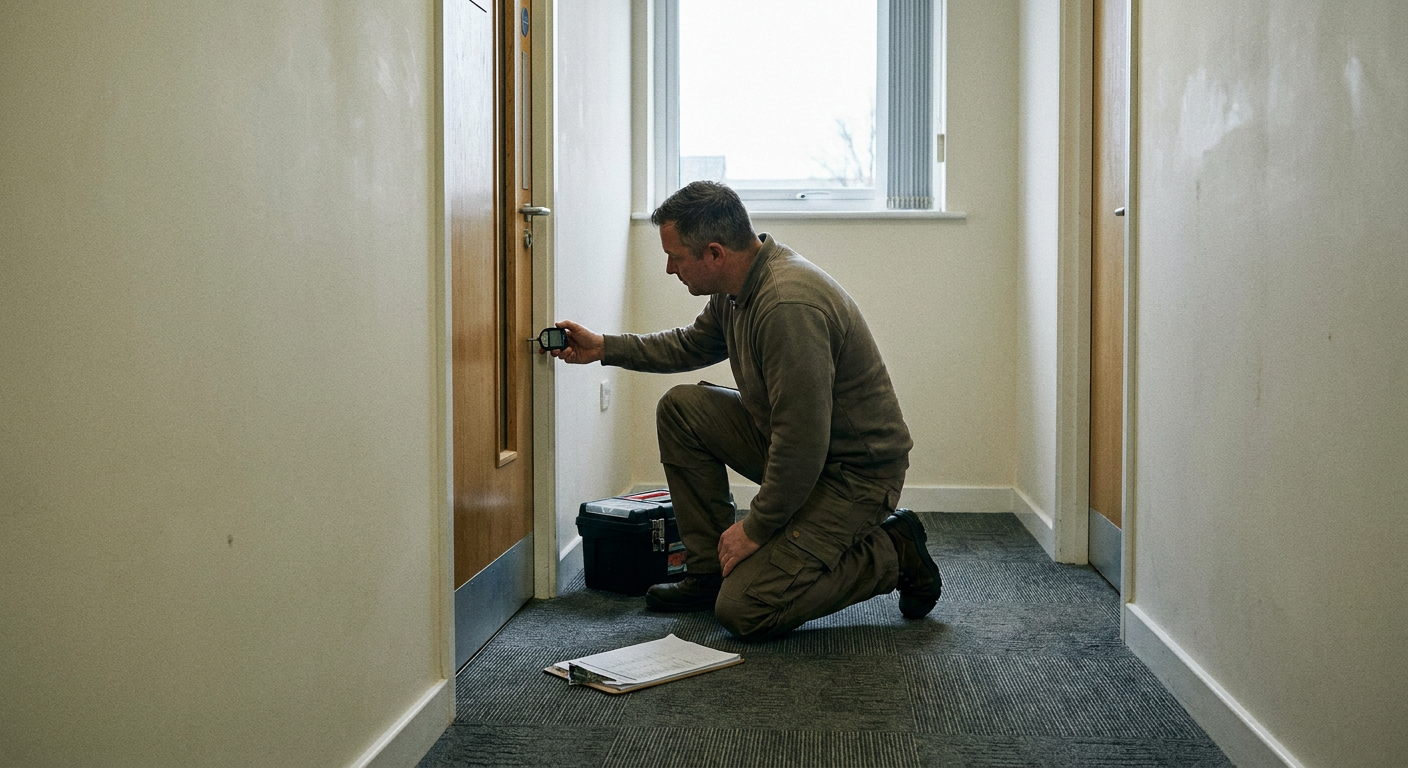
Older doors are sometimes mistaken for fire doors because they look solid or heavy. To learn how to identify fire door construction, a specialist looks for a certification label or plug, usually set into the top edge or the hinge side. This small disc or sticker states the rating, such as FD30 for thirty minutes of resistance. If no label exists, the inspector examines the core material, the thickness and the construction method. Solid timber doors of a certain thickness may have been accepted under older standards, but modern assessments require proof of performance. In blocks across Sutton where original doors remain from decades ago, establishing whether a door meets current expectations is often the first entry on the remedial list. A [Fire Door Inspection in Sutton](/fire-safety/fire-door-inspection-sutton) covers these identification steps for every door in the common parts and at flat entrances.
Gap tolerances around the leaf and frame
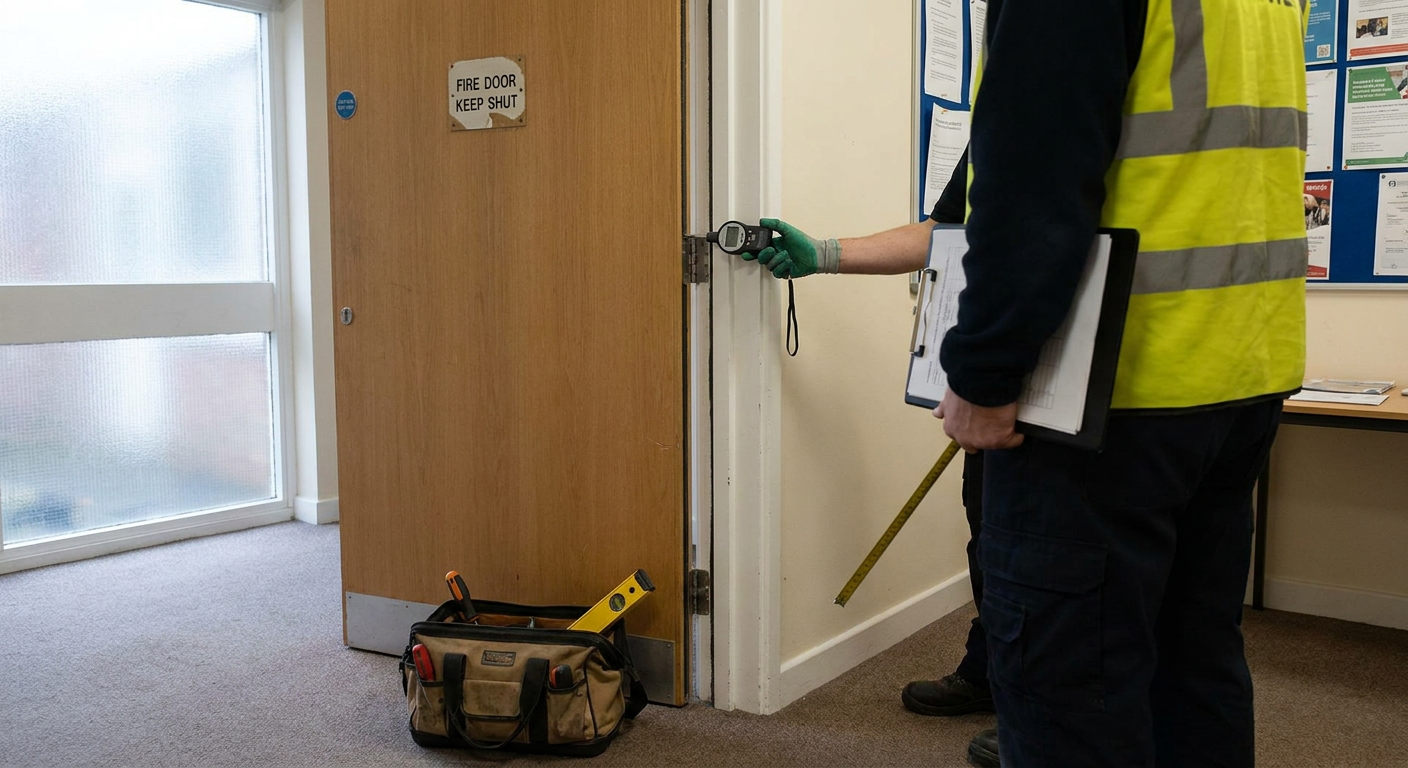
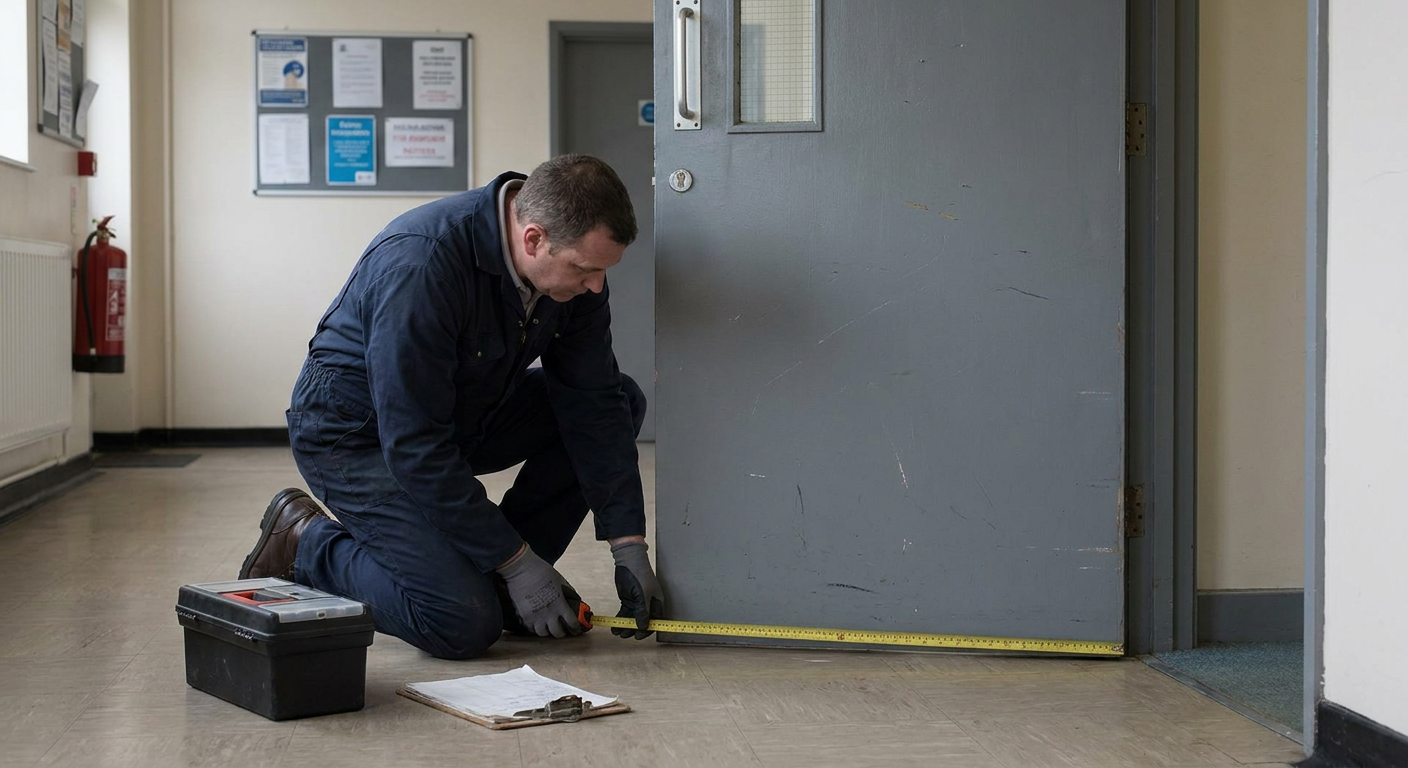
The space between the door leaf and its frame matters because fire and smoke travel through gaps. Inspectors measure the gap at the top, the hinge side and the latch side using feeler gauges. The generally accepted fire door gap tolerance is 3mm, though up to 4mm may be recorded depending on the standard applied. Anything wider allows smoke to bypass the seal.
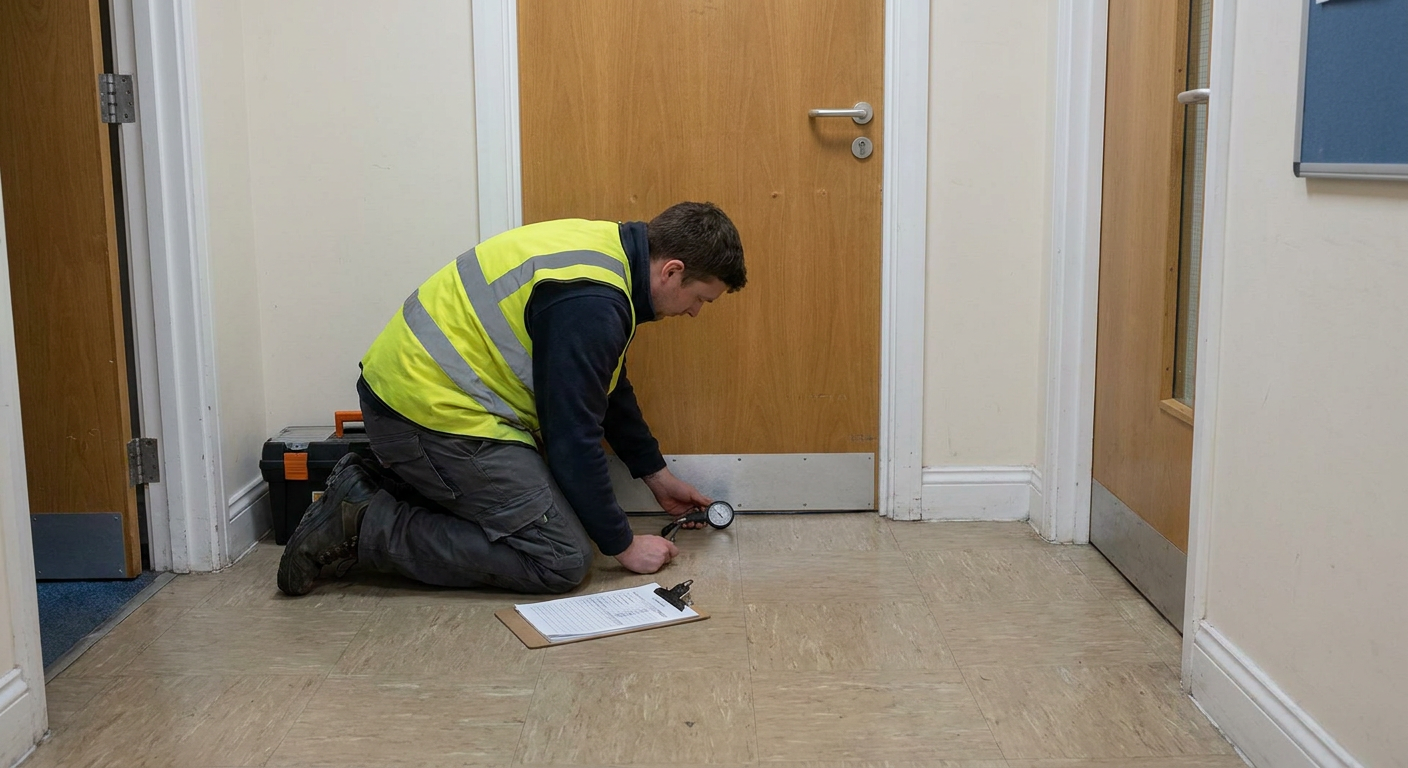
At the threshold, the gap depends on the floor covering. A hard floor might allow up to 8mm or 10mm, but carpet compresses, so the measurement changes. What gap around a fire door is considered too wide on an inspection depends on the specific doorset certificate. When gaps exceed limits, the report will note them for correction. Remedial work might involve adjusting hinges, planing the leaf or fitting a new frame. These measurements form a large part of any assessment carried out by a specialist firm working in Sutton flats and houses in multiple occupation.
Intumescent strips and smoke seals
Intumescent strips sit in grooves around the door leaf or within the frame. They stay dormant until heat activates them, causing the material to expand and seal the gap against fire. Many reports written after inspections in Sutton mention missing or damaged strips. My report mentions missing intumescent strips, can they be retrofitted to existing doors? Yes, a joiner can route a groove into an existing timber leaf or frame and fit new strips, provided the door has enough thickness and the original certification allows it.
Smoke seals are often combined with the intumescent strip in a single unit. If the brush or blade is worn flat, smoke will pass through even before the intumescent material expands. Arranging intumescent strip replacement in Sutton requires someone who understands which profile matches the door certificate. Using the wrong size or type invalidates the rating. The specialist firm handling the work will reference the manufacturer's data sheet before cutting any new grooves.
Self-closing devices on flat entrance doors
A fire door only works when it is shut. That is why closers are fitted to ensure the door returns to the frame after use. Do flat entrance doors in a Sutton block need self closing devices? Under the Fire Safety (England) Regulations 2022, responsible persons must check that flat entrance doors close properly. A flat entrance door closer required notation on a report means the existing device is absent, broken or adjusted incorrectly.
Inspectors test the closer by opening the door to various angles and watching it return. It must latch shut from any position without slamming so hard that it damages the frame. Overhead closers, concealed closers and perko-type chains all appear in local buildings, but not all provide adequate control. If residents have disconnected closers to make daily life easier, the report will flag this as a failure. Guidance on [self closing devices on flat entrance doors in Sutton](/latest/self-closing-devices-on-flat-entrance-doors-in-sutton) explains what duty holders must arrange.
Hinges, ironmongery and glazing requirements
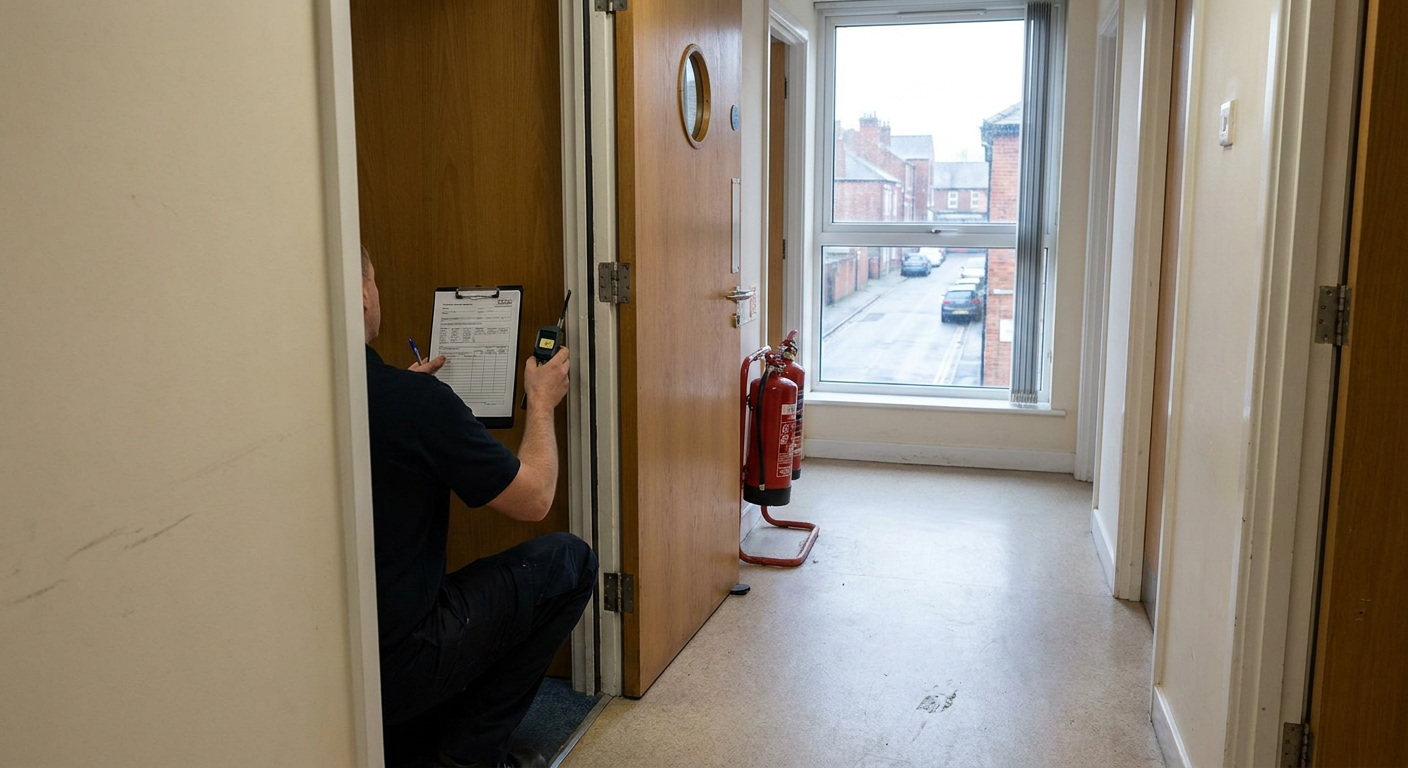
Are the hinges and ironmongery part of the check, and what makes them fail? Hinges must carry a minimum melting point, typically above 800 degrees Celsius. An inspector counts them (three are standard for a fire door) and checks for worn pins, missing screws or signs of sagging. Does glazing in a fire door need to be a particular type, and can it be replaced on its own? Standard window glass shatters quickly in heat. If a vision panel cracks, a specialist glazier can replace just the pane using the correct intumescent glazing channel, provided the surrounding bead and timber are undamaged. The replacement must match the door's original specification exactly.
Signs a fire door needs attention before inspection
Problems with fire doors often show themselves visually before a formal check takes place. Spotting these signs early helps you understand what a specialist will record on their report.
- 1
Visible light around the edges
Daylight showing between the door and frame suggests the gap exceeds the fire door gap tolerance and smoke could pass through freely.
- 2
Door does not latch shut
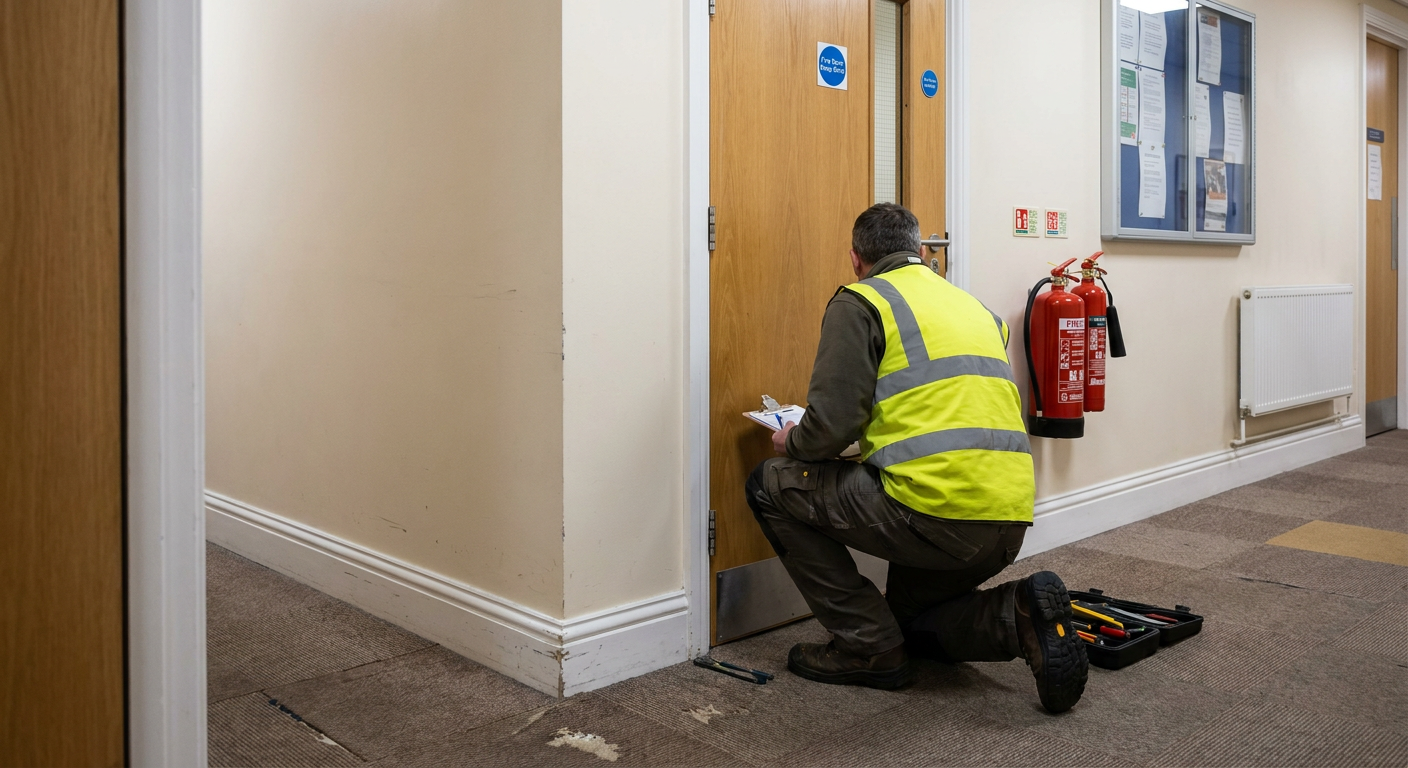
If the door rests against the strike plate without clicking in, the closer may be weak or the hinges could be sagging.
- 3
Painted over or missing seals
Intumescent strips covered in thick paint may not expand correctly. Missing strips leave the edge completely unprotected against fire spread.
- 4
Cracked or unmarked glass
Vision panels without a visible fire-rating etch, or glass showing cracks, indicate the glazing may not meet the required standard.
- 5
Extra holes drilled in the leaf
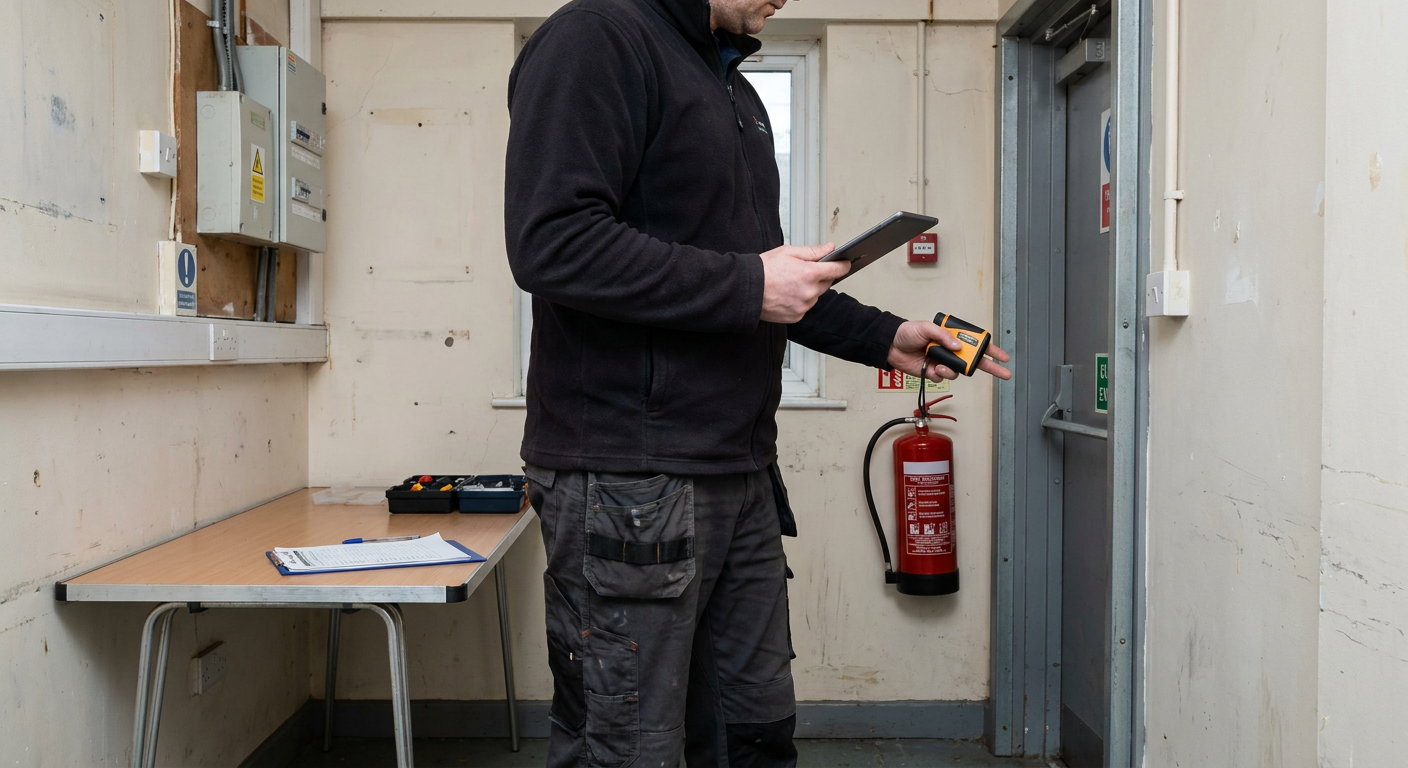
Unfilled holes from removed letterboxes or old hardware compromise the door's integrity and usually require repair or full replacement.
What affects fire door remedial works cost
Every door differs in age, construction and condition. The extent of work needed determines what the specialist charges to put things right.
The specialist firm explains the exact cost of the required work before any repairs begin.
- Retrofitting versus replacing
- Fitting new strips or adjusting hinges costs less than removing a whole doorset and installing a replacement unit, which keeps fire door remedial works cost down.
- Type of closer required
- Concealed closers take longer to install than surface-mounted ones because the mechanism sits inside the top of the door leaf rather than on its face.
- Number of doors affected
- Remedial work across multiple flats in a Sutton block takes more time than addressing a single failed door in a house.
- Timber condition
- Rotted or split frames cannot hold new hinges securely, meaning carpentry repairs must happen before ironmongery is refitted.
Ask about a fire door inspection in Sutton
Send an enquiry describing your building and the doors you are concerned about. You will receive advice on what to do next, and asking costs nothing.
- No obligation to proceed
- Local knowledge of Sutton
- Clear next steps