Sutton guides
Fire safety guides and checks for Sutton buildings
Read through the guides below to find out what a problem in your home means and what to do next. Send an enquiry if you need a specialist firm to carry out the work, and it costs nothing to ask.
Guides on fire risk management in Sutton homes
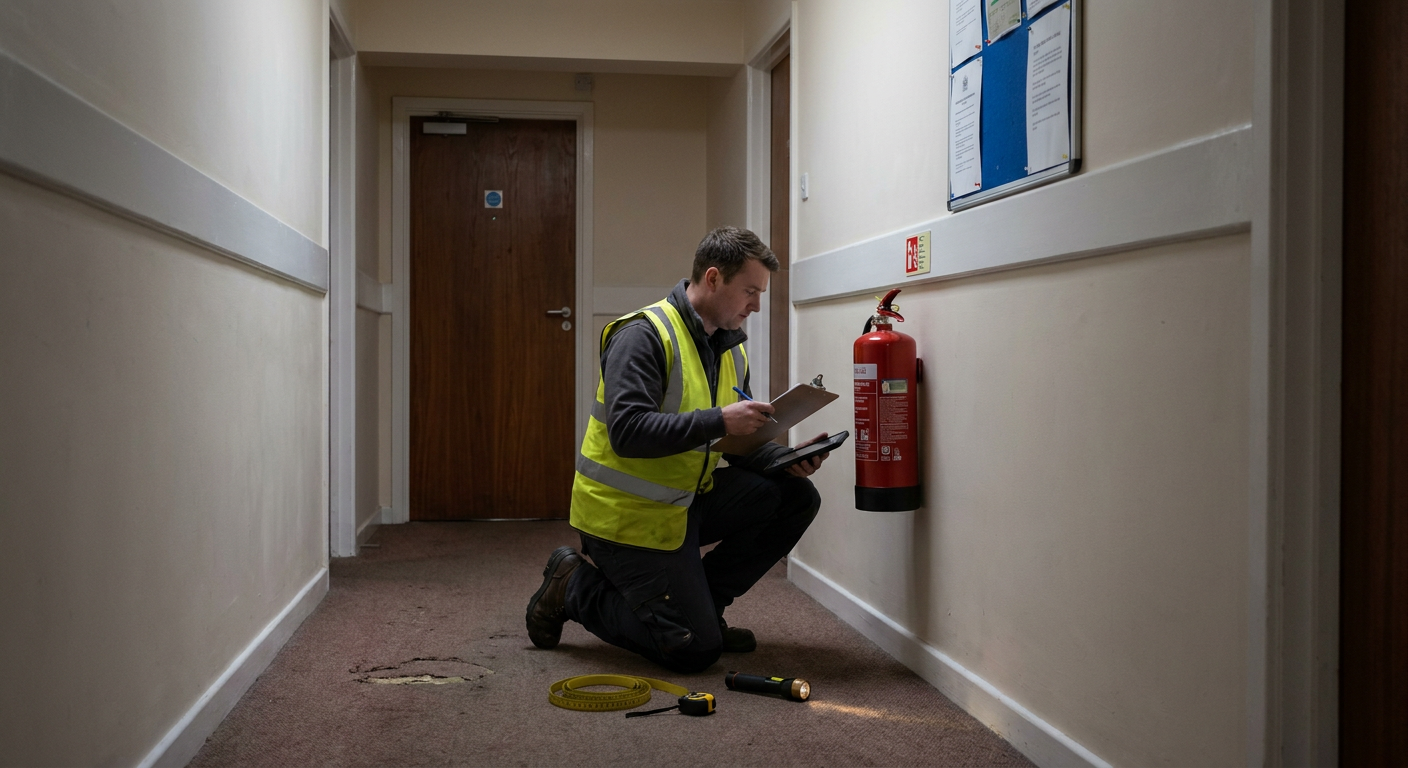
Understanding the fire risk assessment for your building
A fire risk assessment is the starting point for managing fire safety in any shared building or rented home. It identifies how a fire could start, who might be harmed and what needs to change. For flats and houses in multiple occupation across Sutton, this document sets out the steps a landlord or managing agent must take.
The assessment looks at escape routes, alarm systems, emergency lighting and the condition of fire doors. If you live in a block of flats and have noticed blocked corridors or broken self-closing devices on entrance doors, these are exactly the things the assessment should address. Separate specialist firms carry out these assessments and produce the report that tells the responsible person what to fix.
You can read more about what a <a href="/fire-safety/fire-risk-assessment-sutton">fire risk assessment covers</a> and how to <a href="/duties/arranging-an-assessment-sutton">arrange one</a>. For larger blocks where the assessor needs to look inside individual flats as well as communal areas, <a href="/latest/type-3-and-type-4-fire-risk-assessments-in-sutton-flats">type 3 and type 4 assessments</a> apply. Landlords renting to students will need a specific <a href="/fire-safety/hmo-fire-risk-assessment-sutton">HMO fire risk assessment</a>.
Fire doors and what gets checked during an inspection
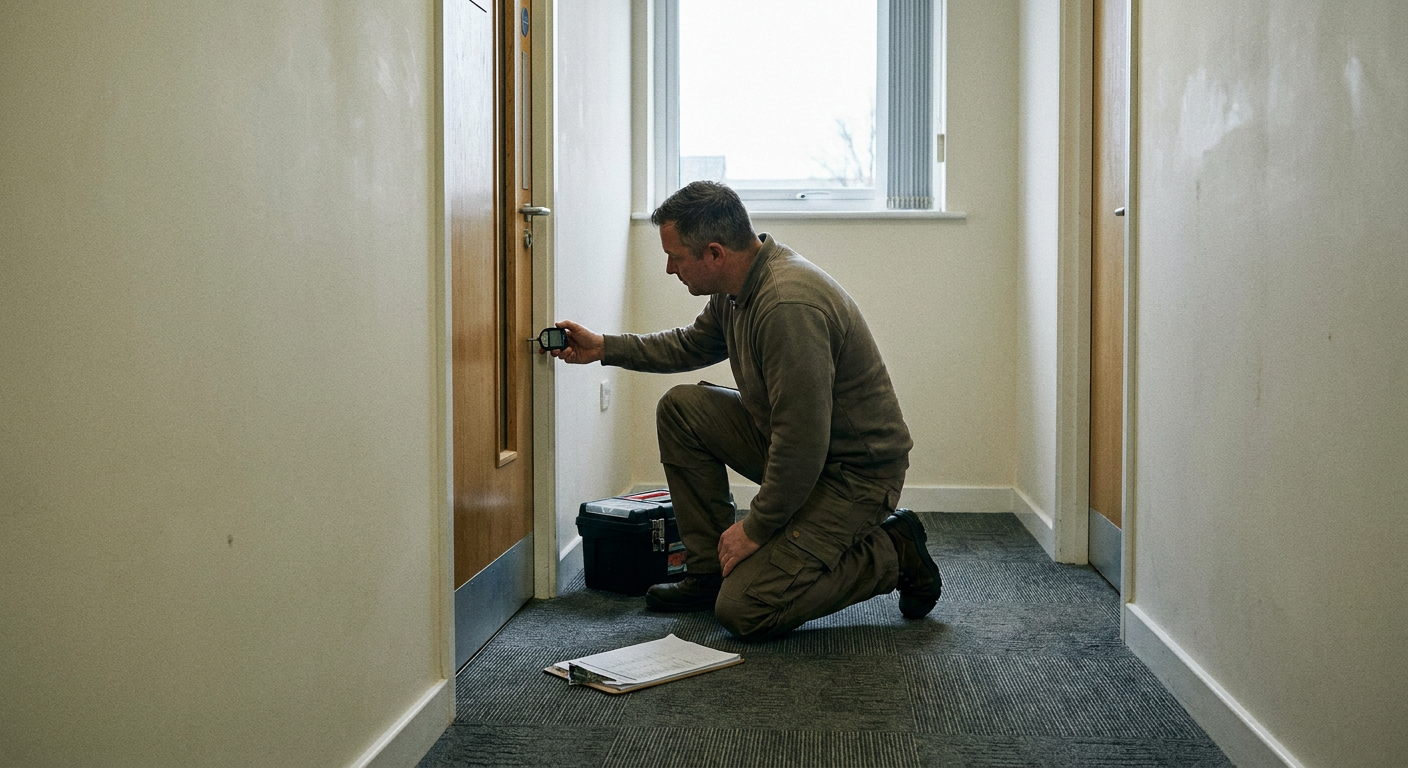
Fire doors hold back smoke and flames long enough for people to leave a burning building. In blocks of flats and HMOs, they sit between individual homes and the stairwell or corridor. A door that does not close fully, has gaps around the frame or missing intumescent seals cannot do its job.
If you have noticed a flat entrance door that slams shut too fast, drags on the carpet or stays open when you let go of it, something is wrong with the hardware. The specialist firm inspects every part of the door: the hinges, the glazing, the gaps, the seals and the self-closing device. They record each fault so the responsible person knows exactly what to repair or replace.
Find out <a href="/duties/fire-doors-what-gets-checked">what gets checked on a fire door</a> and why <a href="/latest/self-closing-devices-on-flat-entrance-doors-in-sutton">self-closing devices</a> matter so much in shared buildings. A full <a href="/fire-safety/fire-door-inspection-sutton">fire door inspection</a> produces a schedule of defects. For landlords in neighbouring areas, specialist firms also carry out <a href="/fire-door-inspection-thornton-heath">fire door checks in Thornton Heath</a>.
Compartmentation and hidden gaps in walls and floors
Compartmentation divides a building into sealed boxes. Walls, floors and ceilings form barriers that stop fire spreading from one flat or room to another. Over time, pipes get replaced, cables get pulled through holes and those barriers get breached without anyone noticing.
A compartmentation survey finds those breaches. The specialist firm looks above suspended ceilings, inside service risers and behind boxing in bathrooms and kitchens. They check whether fire-stopping material is present and whether it matches the required rating for that wall or floor. Missing fire-stopping in a single void can allow smoke to travel through an entire block.
Read about the <a href="/fire-safety/compartmentation-survey-sutton">compartmentation survey process</a> and the kind of hidden gaps it uncovers. Buildings with unusual layouts or older construction methods often need closer attention. Specialist firms also run <a href="/compartmentation-survey-tooting">compartmentation checks in Tooting</a> for flats above shops and converted buildings where the original layout has changed many times.
Alarms, lighting and weekly testing routines
A fire alarm system only works if someone tests it and records the result. In blocks of flats, weekly testing confirms the call points sound the alarm and the panel registers the signal correctly. Emergency lighting needs its own routine: a short functional test each month and a longer duration test once a year to prove the batteries hold their charge.
If the lights in your communal corridor flicker or stay off during a power cut, the emergency lighting has failed. That failure leaves people trying to find stairs in the dark during a real fire. The specialist firm tests the equipment and advises on replacements where units no longer meet the standard.
These guides explain <a href="/latest/weekly-fire-alarm-testing-in-sutton-blocks-of-flats">weekly fire alarm testing</a> and <a href="/latest/emergency-lighting-testing-in-sutton-communal-areas">emergency lighting testing</a> in detail. Both routines fall to the responsible person, but the actual testing and servicing is carried out by a separate specialist firm. You can also ask for <a href="/fire-safety/fire-equipment-testing-advice-sutton">advice on extinguisher testing</a> if your building has them in communal areas.
Bin stores, waste and arson risks around your home
Rubbish left near a building gives an arsonist fuel. Bin stores in blocks of flats are a particular problem when bags pile up outside the designated area or the store itself has no fire separation from the main building. Even wheelie bins lined up against an external wall can spread flames to windows above. Managing waste means keeping bin stores locked, clearing overflow quickly and making sure gates and perimeter fences deny easy access to the site after dark. External lighting deters deliberate ignition. A specialist firm assesses these risks as part of the wider <a href="/fire-safety/fire-risk-assessment-sutton">fire risk assessment</a> and recommends physical changes where behaviour alone will not solve the problem. Read about <a href="/latest/bin-stores-and-waste-as-a-fire-risk-in-sutton-blocks">bin stores and waste as a fire risk</a> and <a href="/latest/arson-risk-at-sutton-premises-gates-bins-and-lighting">arson risks around premises</a> in Sutton. Both guides set out what the responsible person should do before a small fire becomes a major incident.
Evacuation plans, waking watch and vulnerable residents
Every shared building needs a plan for getting people out. In most blocks of flats, the strategy is to stay put unless the fire is in your own home, because the compartmentation should contain the blaze. But if that compartmentation is compromised, or the building is undergoing major works, a simultaneous evacuation might be necessary.
When a simultaneous evacuation is required and the alarm system cannot yet support it, a waking watch provides a temporary measure. Trained staff patrol the building and raise the alarm manually if they detect smoke or fire. This arrangement is expensive and meant to last only until the underlying faults are corrected.
Find out how <a href="/fire-safety/fire-evacuation-plans-sutton">evacuation plans</a> are drawn up and when a <a href="/latest/waking-watch-in-sutton-blocks-of-flats-when-and-why">waking watch</a> becomes necessary. Buildings housing older or less mobile residents need additional thought. Read about <a href="/latest/fire-safety-in-sutton-care-homes-and-sheltered-flats">fire safety in care homes and sheltered flats</a> to understand the extra measures required.
Your duties as a responsible person in Sutton
The responsible person is whoever controls the shared parts of a building. In a block of flats, that is usually the freeholder or the managing agent. In an HMO, it is the landlord. The law places the duty to manage fire risk on them, and failing to act can lead to enforcement notices from the council.
If you have received a letter from the council about fire safety, you need to respond within the deadline and show what steps you are taking. The Fire Safety (England) Regulations 2022 added further requirements for buildings over eleven metres, including providing information to the local fire service and checking flat entrance doors.
Read about <a href="/duties/responsible-person-sutton">who the responsible person is</a> and <a href="/duties/review-dates">how often the assessment needs reviewing</a>. Guides on <a href="/duties/enforcement-letter">handling an enforcement letter</a> and the <a href="/duties/fire-safety-england-regulations-2022-sutton">2022 regulations</a> explain what changed. Landlords should also check <a href="/duties/hmo-licence-fire-conditions-sutton">HMO licence conditions</a> and arrange <a href="/duties/term-start-checks">student house checks before term starts</a>. Separate specialist firms handle the practical work, and you can read <a href="/duties/common-questions-sutton">answers to common questions</a> if you are unsure where to begin.
Ask about fire safety in your home
Send an enquiry describing what you have noticed. A specialist firm will review the details and tell you what needs doing. There is no fee for asking and no obligation to proceed.
- No fee to ask
- No obligation to proceed
- Specialist firms do the work