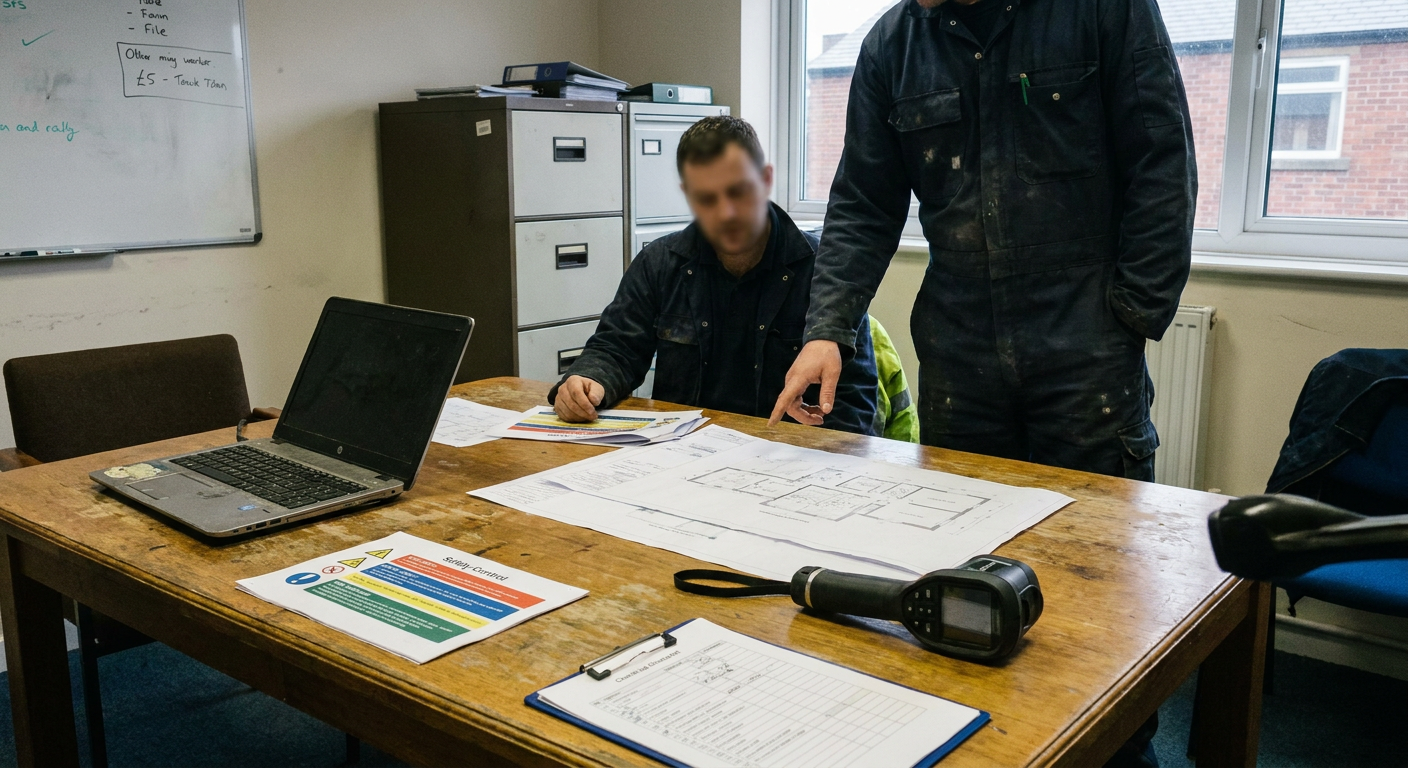
Sutton fire safety duties
Who is the responsible person for fire safety?
Send a short message describing your building in or around Sutton. There is no charge for this, and it does not commit you to any work. Find out where the duty sits before you arrange anything else.
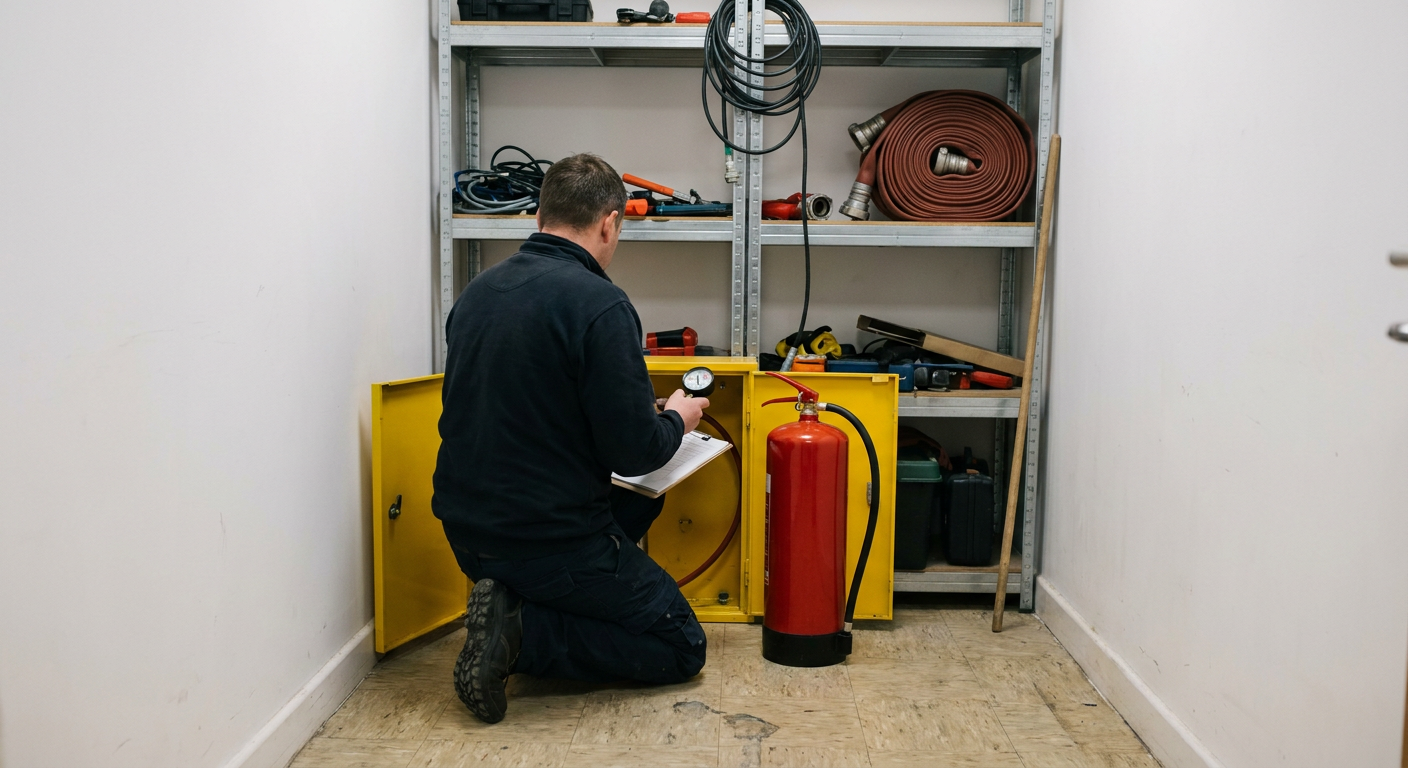
Finding the fire safety order duty holder
The question behind most enquiries is who is the responsible person fire safety, because the answer decides who must act. Under the Regulatory Reform (Fire Safety) Order 2005, the fire safety order duty holder is the person who has control of the premises. In a workplace, that is usually the employer. In a block of flats in Sutton, it is typically the freeholder or the managing agent acting on their behalf.
The law does not name a job title. It points to whoever controls the common parts: the stairs, corridors, lobbies and plant rooms. If you own the building, landlord fire safety responsibility in Sutton falls to you. If a managing agent runs it day to day, managing agent fire safety obligations mean they often carry the duty in practice, though the freeholder remains accountable. The first step is always reading the lease or management agreement to see who controls those shared spaces.
Leaseholders, freeholders and resident companies
A leaseholder in a Sutton block rarely holds the duty for communal areas. The freeholder or leaseholder fire duty distinction comes down to control. Your lease covers your flat; the freehold covers the structure and the shared escape routes. So if someone asks who arranges fire risk assessment block responsibilities, the answer is almost never an individual leaseholder living inside one of the flats.
Resident management companies complicate things. Directors sometimes hear from a managing agent that the duty sits with them as officers of the company. That can be true if the company owns the freehold or holds the repair obligations through the leases. But the agent cannot simply pass the legal burden over by saying so. The articles of association and the lease terms decide it. Where a resident company is the responsible person, its directors carry the liability collectively. They should seek specific advice rather than rely on a single line in a management contract.
Employers renting space in Sutton
Employer fire safety duties UK legislation applies to anyone who controls a workplace. If you rent an office in Sutton, you are the responsible person for the area your staff occupies. You must assess the risks inside your demise and ensure your employees know how to leave safely. This might involve arranging <a href="/fire-safety/fire-safety-awareness-training-sutton">Fire Safety Awareness Training in Sutton for Staff</a> so they recognise the alarm and know the route out.
You do not normally carry the duty for the communal stairs, lifts or shared lobby outside your door. Those remain with the building owner or whoever controls the common parts. But your duty and theirs overlap at the boundary. You need to cooperate. If the building has multiple employers sharing a stairwell, each is responsible for their own floor while the landlord manages the shared escape route. Confusion here is common, and getting it wrong leaves gaps in protection.
When more than one person carries the duty
Can there be more than one responsible person for the same building? Yes. Mixed-use buildings in Sutton, such as shops on the ground floor with flats above, frequently have several. The shop owner controls their unit. The residential freeholder controls the upper floors and the shared entrance. Each is a responsible person for the part they control.
The law requires them to cooperate and coordinate. One cannot assume the other is handling the alarms or the fire doors. A specialist firm carrying out a <a href="/fire-safety/compartmentation-survey-sutton">Compartmentation Survey in Sutton: Hidden Gaps</a> will look at how fire stops between these different zones, but the duty to commission that work belongs to whoever controls the relevant area. If nobody knows who that is, both parties risk doing nothing.
What happens when nobody takes the role
If nobody accepts the role and the fire service inspects, the consequences fall on whoever had control and failed to act. The enforcing authority does not accept ignorance as a defence. They will look at the leases, the management contracts and the reality of who held the keys, collected the rent or directed the maintenance.
An enforcement notice can require immediate changes. Read what to do if you receive a <a href="/duties/enforcement-letter">Fire Safety Letter From Council: What to Do</a>. In severe cases, prosecution follows. The gap does not protect anyone; it exposes everyone. Where roles are unclear, the safest course is to establish who controls what before an inspector arrives. A specialist can review the arrangements and advise on where the duty actually lies.
Competence and appointing a specialist
Does the responsible person have to be competent themselves? The law says they must ensure the work is done by someone competent. That does not mean the freeholder needs to become a fire engineer. It means they must appoint a specialist firm that knows what it is doing.
The responsible person retains the legal duty even after hiring help. Choosing a firm to conduct a <a href="/fire-safety/fire-risk-assessment-sutton">Fire Risk Assessment in Sutton: What It Covers</a> does not transfer liability. It discharges the duty to seek competent assistance. If the appointed firm produces a poor report, the responsible person is still answerable for the building's safety. This is why selecting a specialist matters. The responsible person must check that the firm understands the specific building type, whether that is a converted house in Ewell or a purpose-built block near Croydon.
Signs the duty is falling through gaps
Buildings show problems when no one is sure who should fix them. These signs suggest the responsible person has not been identified or has stopped acting.
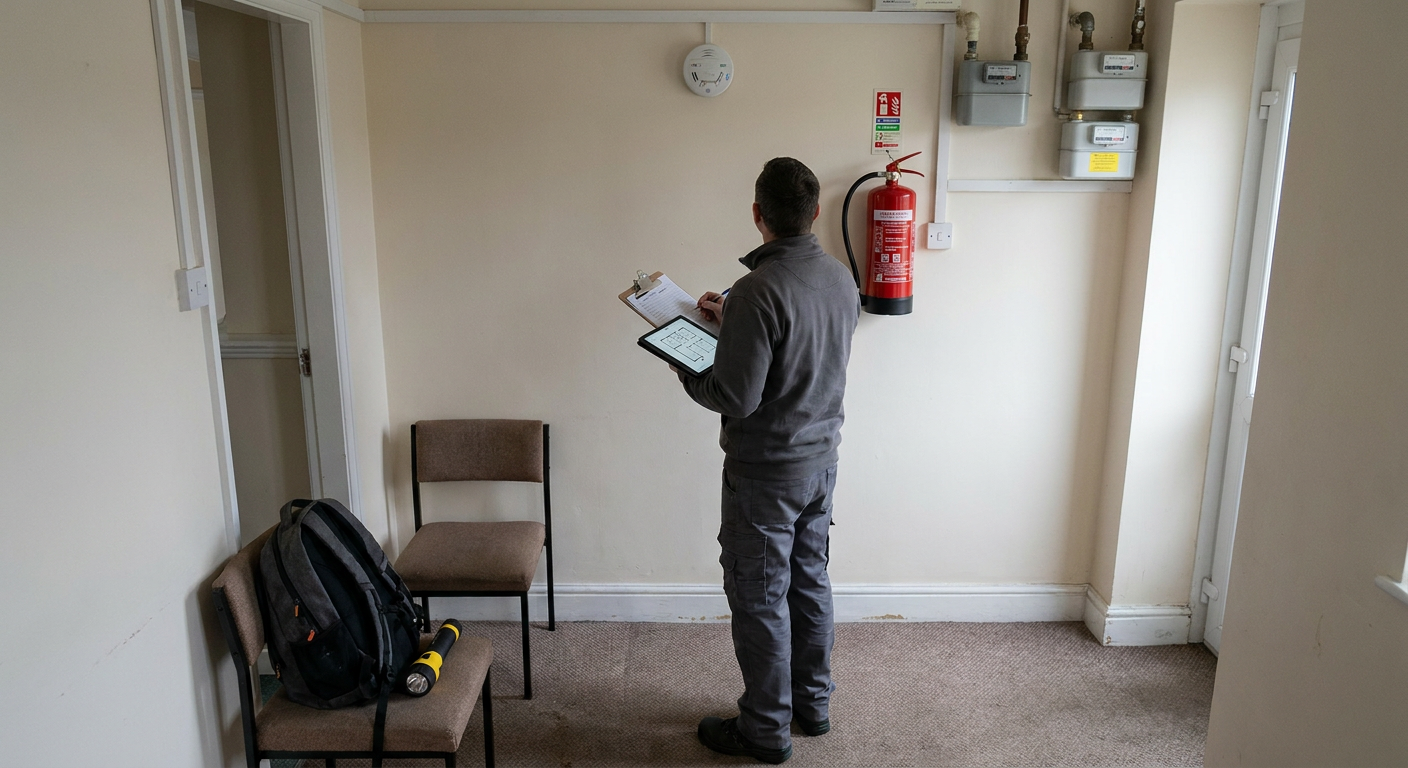
- No fire action notices in the stairwell
- Nobody has taken ownership of the escape plan. A specialist can draft <a href="/fire-safety/fire-evacuation-plans-sutton">evacuation plans</a> once the duty holder is confirmed.
- Self-closers missing on flat entrance doors
- Communal fire doors are unchecked. The responsible person must arrange a <a href="/fire-safety/fire-door-inspection-sutton">fire door inspection</a> to find out which ones fail.
- Extinguishers with expired service labels
- A gap in equipment checks usually points to unclear responsibility for shared areas. Finding out who holds the fire safety order duty settles it, so the right person arranges <a href="/fire-safety/fire-equipment-testing-advice-sutton">extinguisher testing</a> on schedule.
- No record of a recent fire risk assessment
- The statutory review date has passed. The duty holder needs to arrange a new <a href="/duties/review-dates">assessment review</a> without delay.
What shapes the cost of meeting the duty
The work required depends entirely on the building. A small HMO and a large block of flats demand different levels of attention, so costs differ.
- Size and layout
- More floors, compartments and escape routes take longer to assess and document thoroughly.
- Building use
- Shops, offices and flats each follow different regulations, changing the scope of the work.
- Existing records
- A building with no previous assessments or plans requires a full baseline survey from scratch.
- Number of occupants
- Higher occupancy increases the complexity of evacuation planning and staff training requirements.
The specialist explains exactly what the particular job involves and costs before anything is agreed.
Find out where your duty starts
Describe your building and your role in it. The enquiry goes to a specialist firm that handles fire risk management in Sutton. Sending it costs nothing and does not commit you to booking any work.
- No obligation to proceed
- Free initial discussion
- Local specialists only