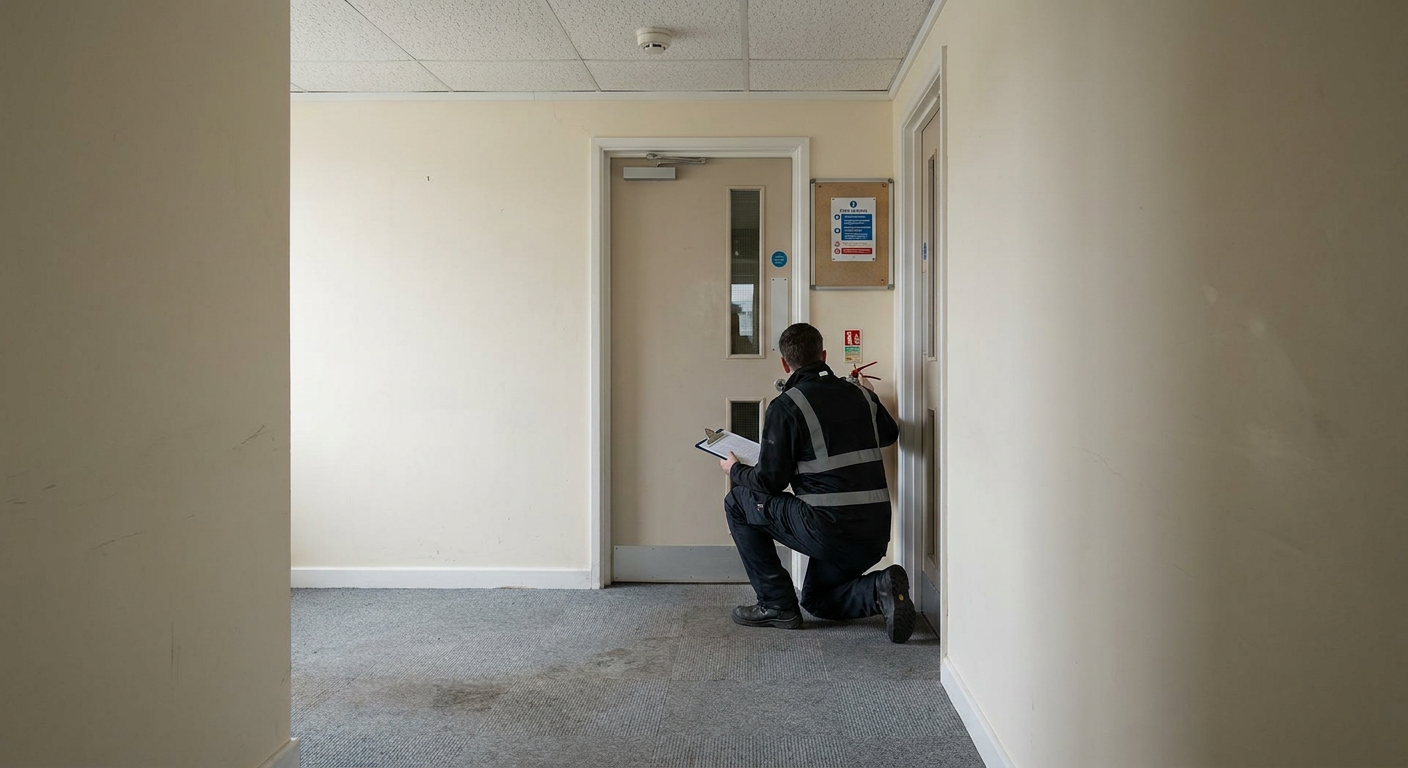
Sutton
Fire risk assessment in Sutton
Send an enquiry about your block or home. A specialist firm will read what you write and tell you if a fire risk assessment in Sutton is the right step, with no charge for that advice.
Fire safety services in Sutton
Each service answers a different question about your building. The right one depends on what you have noticed.
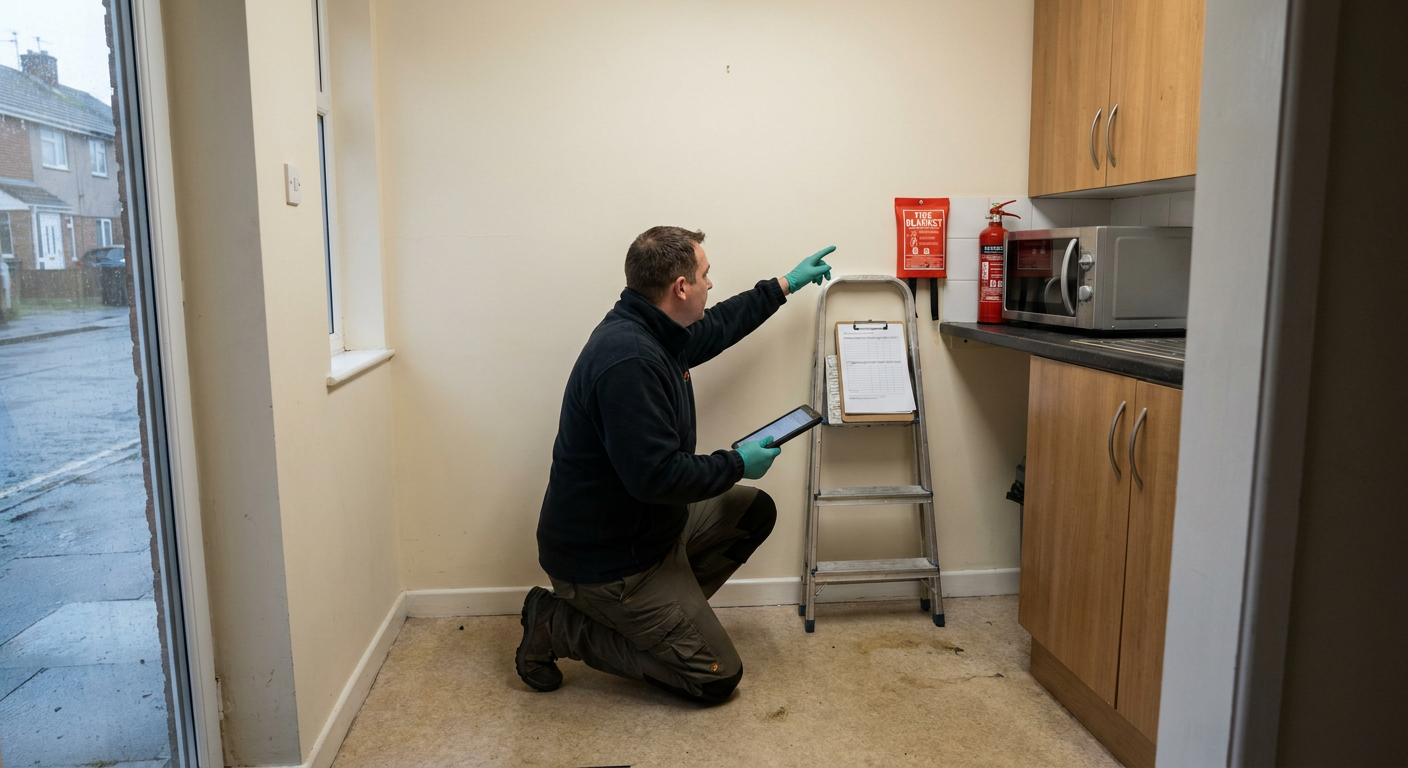
Fire Door Inspection in Sutton
When doors stick, rattle or fail to close on their own.
Compartmentation Survey in Sutton
When smoke travels between flats through hidden gaps.
Fire Evacuation Plans in Sutton
When residents need clear routes out of the building.
HMO Fire Risk Assessment in Sutton
For landlords renting rooms in a shared house.
Fire Safety Policy in Sutton
When written procedures are missing or out of date.
Health and Safety Reports in Sutton
When a council or lender asks for formal records.
What signs point to a fire risk
A smell of smoke in the corridor and a door that drags on the carpet are both problems, but they come from different causes. An assessor reads each sign against the building layout.
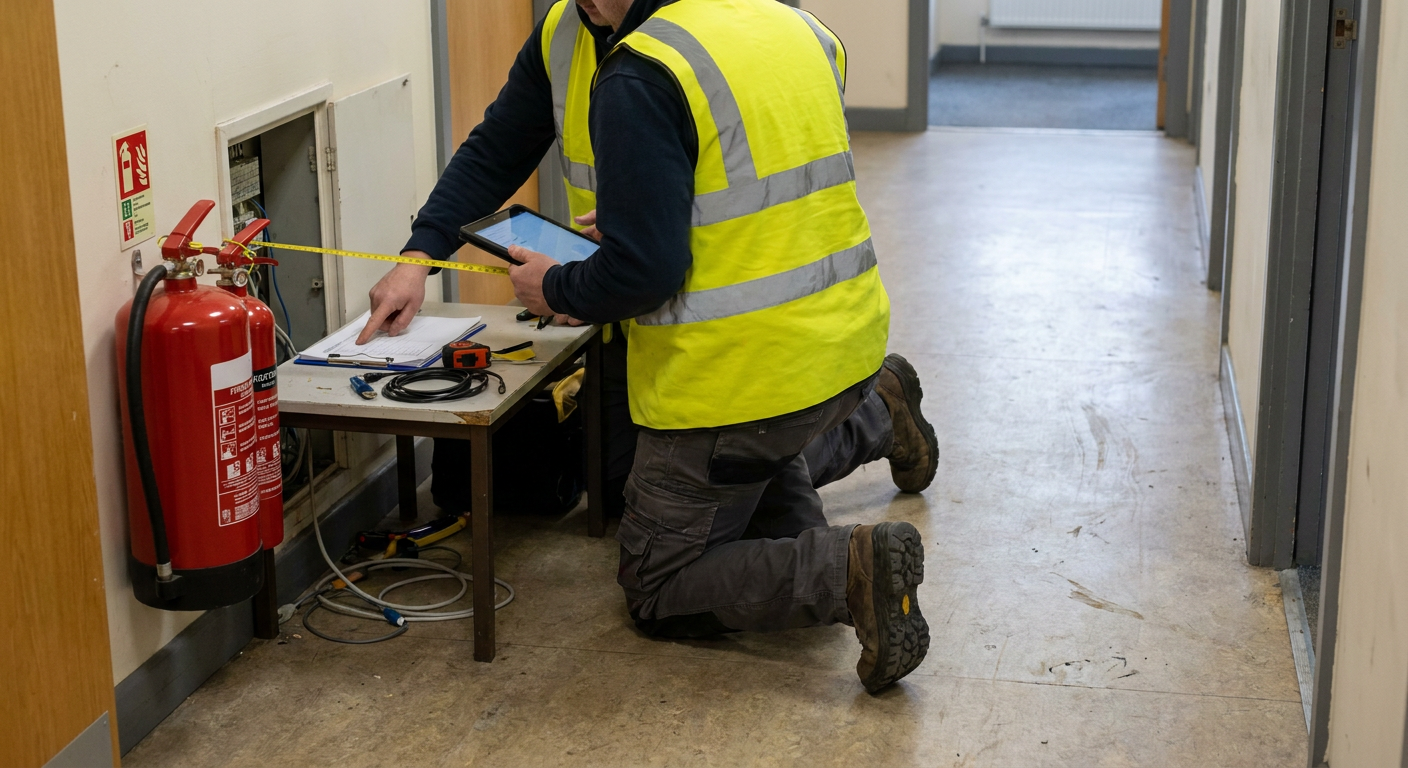
- A flat entrance door that does not shut by itself
- The self-closing device has failed or been removed. A fire risk assessor in Sutton checks the hinges, seals and closer to see if the door can hold back smoke.
- Scorch marks around the bin store
- Someone has set light to rubbish or dropped a cigarette. The assessor records this as arson risk and recommends changes to locks or lighting.
- Smoke alarms beeping in the hallway at night
- Batteries are low or the units are past their working life. Testing the alarm system forms part of every FRA for a block of flats.
How the assessment works
- 1
You describe the building
Send details of the address, the number of storeys and any problems you have noticed. Suttonfire passes this to a specialist firm.
- 2
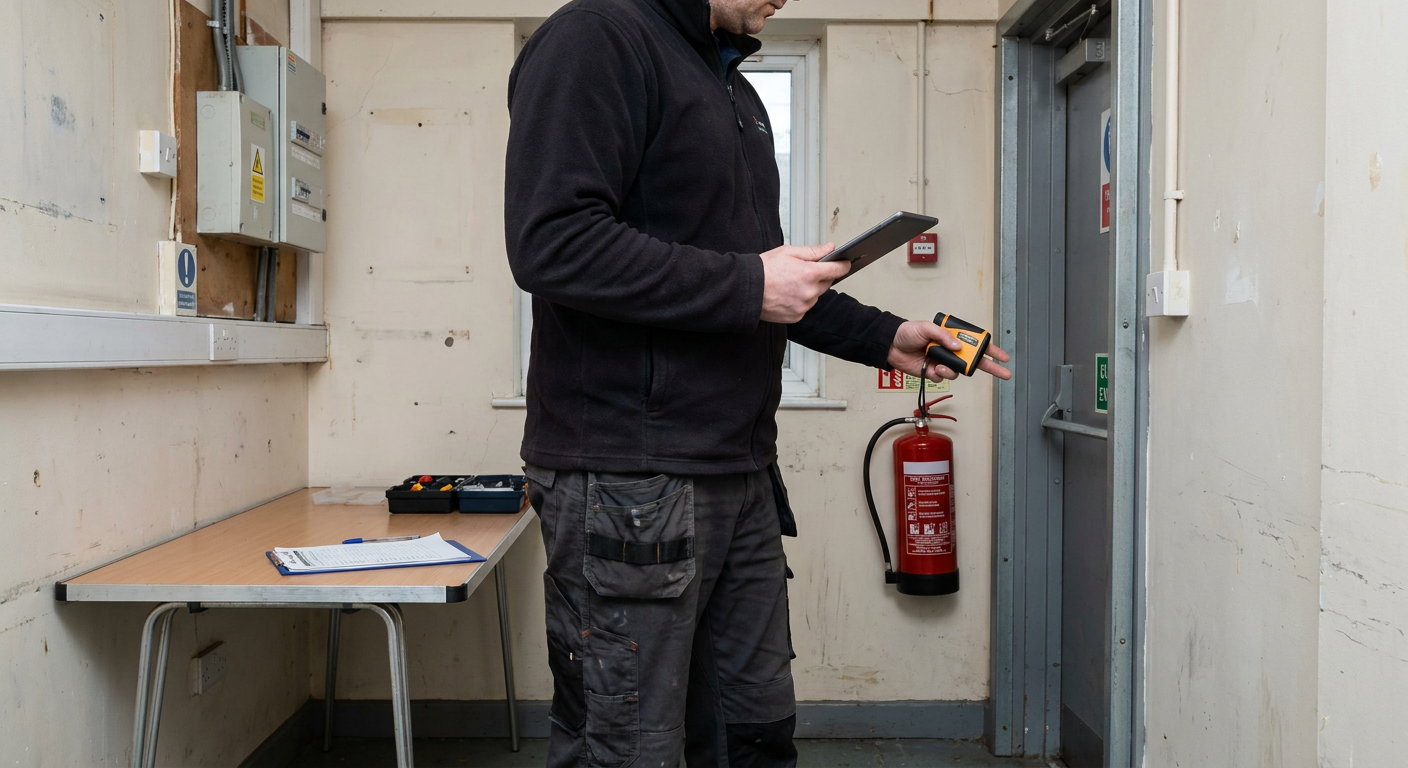
The assessor visits
A competent person walks the common parts, checks doors and reviews alarm panels. They do not need entry to every flat.
- 3
You receive the record
The specialist firm writes up significant findings, ranks them by urgency and sets review dates for the responsible person.
What the assessor examines on site
The sequence matters because a blocked exit makes everything else secondary. The specialist firm starts with escape routes before looking at ignition sources.
-
Escape routes and exits
The assessor measures corridor widths, checks that final doors open freely and confirms signage is visible from every flat entrance.
-
Fire doors and frames
Gaps around each leaf are measured with feeler gauges. Intumescent strips and cold smoke seals must be present and intact.
-
Detection and alarm systems
The assessor tests call points, sounders and the control panel to confirm the alarm activates across every communal area. This rules out dead zones where residents would not hear a warning during an actual fire in the building.
-
Ignition sources and fuel loads
The assessor examines electrical cupboards, stored furniture and bin chutes to identify anything that could start or feed a fire. This rules out hidden ignition sources and confirms whether combustible material has been left where it should not be.
If a type 1 inspection cannot settle a question, the report recommends a more intrusive survey.
Questions about assessments in Sutton
Landlords and managing agents ask these most often when arranging a landlord fire assessment in Sutton.
- Cost for a small block of flats
- Fire risk assessment cost for flats depends on storeys, flat count and access. The specialist firm quotes after reading your enquiry.
- Time on site and flat access
- A visit takes a few hours. The assessor inspects common parts; entry to individual homes is rarely required for a standard type 1 assessment.
- Significant findings and who fixes them
- A significant finding is a hazard that needs action. The responsible person arranges the repair, guided by the priority the assessor assigns.
- Report delivery time
- The written record usually arrives within days of the fire safety inspection. SM1 postcodes and wider Sutton addresses follow the same timetable.
- Insurer requirements and age of report
- Insurers ask for a current assessment. Most expect the document to be under twelve months old, or reviewed since any building alteration.
- Type 1 versus intrusive types
- Most blocks need a non-destructive type 1. If compartmentation is unknown, the report may recommend a type 3 or type 4 survey.
Areas covered around Sutton
Suttonfire takes enquiries from across the borough and neighbouring towns. Specialist firms carry out the work locally, so travel time stays short.
If your street is not listed, send an enquiry anyway. Coverage extends across south London and Surrey.
- Fire risk assessment Mitcham
- Fire risk assessment Thornton Heath
- Fire risk assessment New Malden
- Fire risk assessment Epsom
- Fire risk assessment Tooting
- Fire risk assessment Beddington Corner
- Fire risk assessment Ewell
- Fire risk assessment Colliers Wood
- Fire risk assessment Wimbledon
- Fire risk assessment Croydon
- Fire risk assessment Waddon
Ask about a fire risk assessment
Write a few lines about your building. Suttonfire forwards the enquiry to a specialist firm, who replies with next steps. Sending it commits you to nothing.
- No obligation
- Free initial advice
- Local specialists