Flat entrance doors
Self closing devices on flat entrance doors in Sutton
Send a question about the door closers in your block. A specialist firm will read it and reply with what needs doing next, and asking costs nothing.
Why flat entrance doors in Sutton need working self-closers
Why a self-closing device matters on every flat door
A flat entrance door separates your home from the shared corridor outside. If a fire starts inside your flat, that door is the only thing stopping smoke and heat from filling the escape route your neighbours rely on. The same applies in reverse: a fire in the hallway must not reach you while you wait for help or make your way out.
For that barrier to work, the door has to be shut. People leave doors open for air, for carrying shopping, or because a heavy door is hard to pull closed. A self-closing device removes that choice. It pulls the door back into the frame every time someone lets go of the handle.
In blocks across Sutton, these devices are fitted to the top of the door or concealed inside it. They use a spring and hydraulic fluid to control how fast the door swings and how firmly it latches. Without one, a fire door is just a piece of wood standing slightly ajar.
How a closer is checked during a fire door inspection
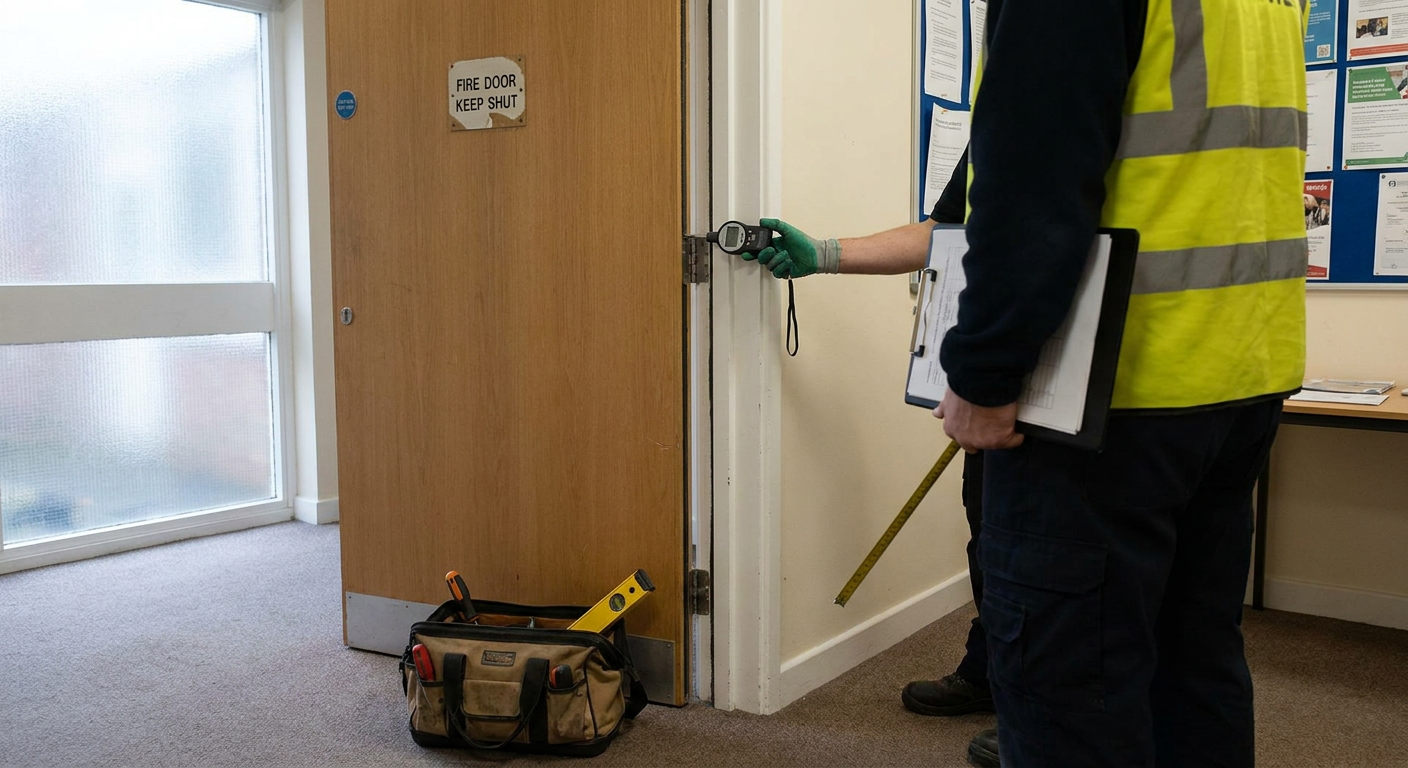
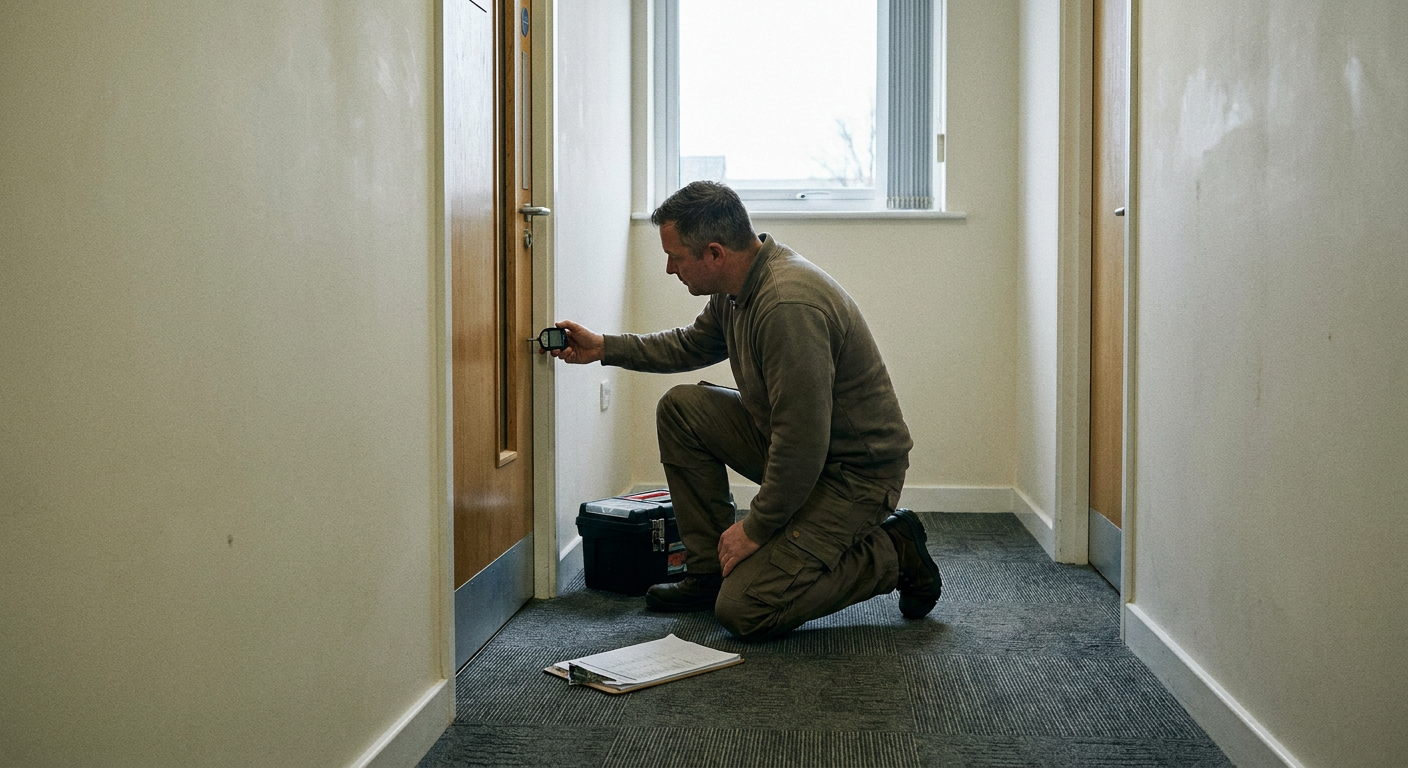
When a specialist firm carries out a fire door inspection, the closer is one of the first things they look at. They open the door fully and let it go. It should swing back smoothly, without sticking, and latch shut under its own power. A door that stops halfway or bounces off the frame has failed.
They also check the closing speed. Most devices have two valves: one controls the main sweep from wide open to nearly shut, and the other controls the final few degrees where the latch engages. If the main sweep is too fast, the door slams. If the final phase is too slow, the latch never catches.
The inspector looks at the fixings too. Screws work loose over time, especially in timber frames that expand and contract. A bracket hanging by one screw will not hold the door against the pressure of a fire. They record each fault so the responsible person knows exactly what needs attention.
Signs a closer is worn out or failing
You do not need training to spot a failing closer. Listen for the bang when a neighbour leaves their flat. A working device brings the door to a quiet, firm close. A loud slam means the hydraulic fluid has leaked out or the adjustment valve has been wound too far.
Look at the gap between the door and the frame when it is supposedly shut. Light coming through the top edge means the latch never engaged. The arm might be bent, or the spring has lost tension after years of use.
Sticky residue around the hinge side of the door is another sign. Hydraulic fluid leaks slowly, leaving a dark film on the paintwork. Once the fluid level drops, the device loses its ability to control the swing. At that point it needs replacing rather than adjusting.
What happens when a closer fails in a Sutton block
A single broken closer compromises the whole floor. Smoke travels along corridors and up stairwells far faster than flames. If one flat door stays open, the shared escape route fills with toxic gas within minutes, trapping people who assumed the hallway was safe.
Under the Fire Safety (England) Regulations 2022, the responsible person for a block of flats must check fire doors regularly. In buildings over eleven metres, those checks include quarterly inspections of flat entrance doors. A failed closer found during one of these checks must be recorded and repaired.
If a fire occurs and an investigation finds doors propped open or closers missing, the consequences fall on whoever manages the building. Enforcement action can follow, but the real cost is measured in injuries. Arranging a fire risk assessment identifies these faults before an emergency exposes them.
Getting a faulty closer replaced or adjusted
Replacing a closer is straightforward work for a specialist firm, but the replacement part must suit the door. A heavy solid-core door needs a stronger spring than a lighter one. Fitting the wrong size means the new device fails just as quickly as the old one.
Adjustment is sometimes enough. A technician turns the valves in small increments, testing the swing after each turn until the door closes firmly without slamming. They also tighten the arm brackets and check the hinge alignment, since a sagging door puts extra strain on any closer.
If you manage a block in Sutton and suspect the doors are not closing properly, ask for a fire door inspection. The specialist firm will test every flat entrance door, note which closers need attention, and provide a clear report. You then know exactly what to arrange and why.
Ask about the doors in your block
Send the details of your building and what you have noticed. A specialist firm will review it and tell you whether an inspection is needed, with no obligation to proceed.
- No obligation to proceed
- Clear advice on next steps
- Local knowledge of Sutton blocks