Sutton communal areas
Emergency lighting testing in Sutton communal areas
Send an enquiry about emergency lighting in your building. A specialist firm will reply with what needs checking and what it costs, with no obligation to book anything.
Why emergency lighting matters in shared hallways
When the mains power fails in a block of flats or a shared house, the corridors and stairwells go dark immediately. Residents trying to leave need enough light to see the floor, the edges of the stairs and the direction to the final exit door. Emergency lighting provides that visibility.
The requirement for emergency lighting usually comes from a fire risk assessment. The assessor walks the escape routes and decides whether the existing natural or borrowed light is enough once the power goes off. In most Sutton buildings with internal corridors, windowless staircases or long hallways, fitted emergency lights are necessary.
A responsible person must make sure these lights work when needed. That means arranging regular testing by someone who understands the equipment. The specialist firm carries out the checks, records the results and flags any faults so they can be fixed before a real power cut happens.
The short monthly functional test
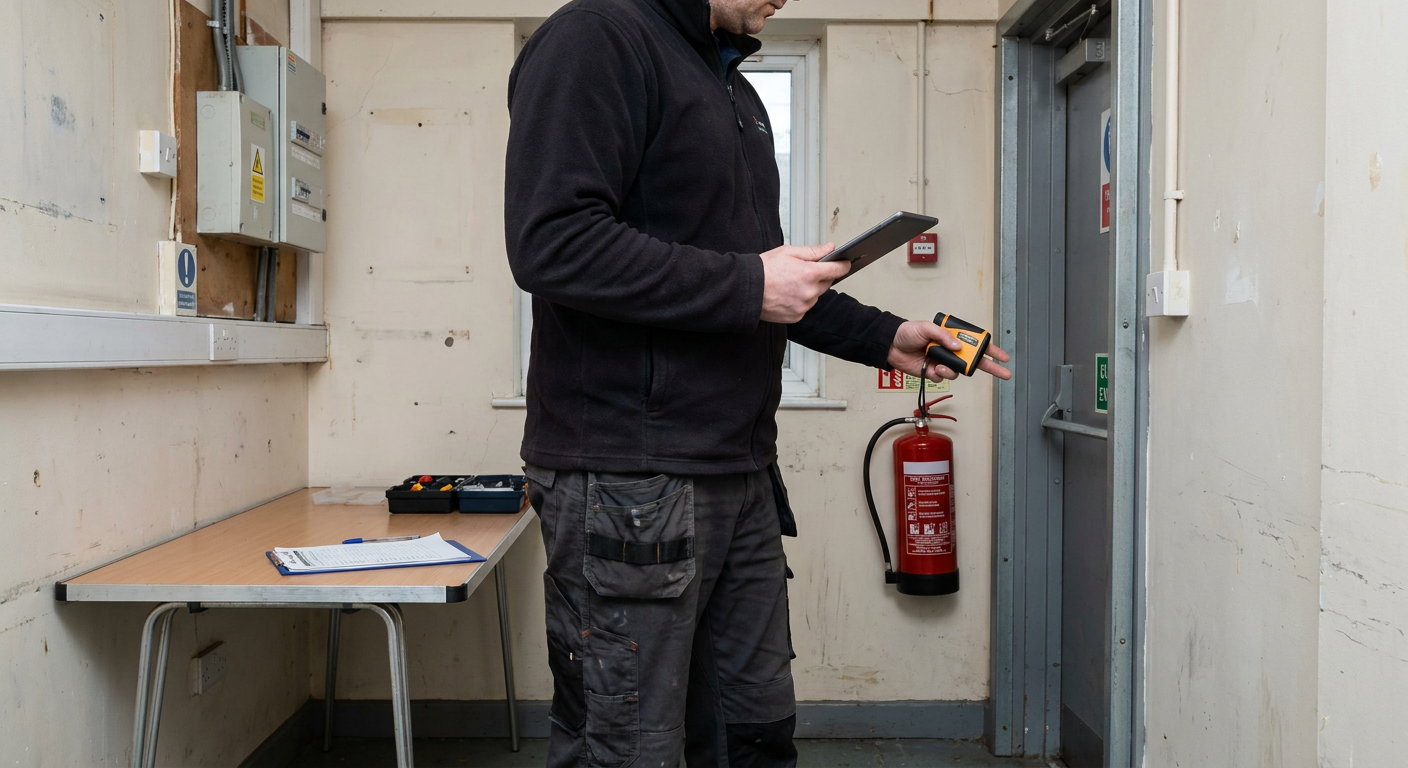
Every month, each emergency light needs a brief check to confirm it switches on when the normal supply is cut. This is known as a functional test. The specialist simulates a power failure, usually by operating a dedicated test switch rather than turning off the whole building.
During this short test, the specialist looks at every fitting along the escape route. Each lamp should illuminate without flickering or delay. Any unit that stays dark, glows weakly or takes too long to come on has a fault. Common causes include a failed bulb, a broken charging circuit or a battery that no longer holds a charge.
The monthly check does not drain the batteries fully. It only proves the system responds. If a problem is found, the specialist notes it in the logbook and arranges a repair. Leaving a faulty unit until the next annual test risks leaving a corridor in darkness during an actual emergency.
The annual full duration discharge test
Once a year, the emergency lighting system must run through a full discharge test. This longer test shows whether the batteries have enough capacity to keep the lights on for the entire time residents might need to evacuate. The specialist checks each fitting at the end of the period. Every lamp must still be lit. If one dims or goes out before the three hours are up, its battery needs replacing. After the test, the power is restored and the specialist confirms that every unit begins recharging correctly. Batteries degrade over time, especially in warm plant rooms or cold external porches. The annual test identifies units approaching the end of their life so they can be replaced on schedule rather than after a failure.
What gets recorded in the logbook
British Standard BS 5266 requires a logbook for every emergency lighting installation. The specialist keeps this record up to date after each visit. It contains the date of every test, the name of the person who carried it out, the results and details of any faults found.
If a lamp failed the monthly check, the logbook shows when the replacement was fitted. If a battery did not last the full three hours during the annual test, the entry records the new battery installation. Fire officers or council inspectors may ask to see this book during a visit or after an incident.
Keeping accurate records protects the responsible person. It shows that testing happened on time and that faults were dealt with promptly. A missing or incomplete logbook suggests the system has been neglected, which can lead to enforcement action. The specialist firm maintains these records as part of the ongoing service.
Where the lights need to be checked
Testing covers more than just the main hallway. The specialist checks every point where a resident might hesitate or change direction during an evacuation. Stair landings, corridor junctions, changes in floor level and the area immediately inside the final exit door all require illumination.
In larger Sutton blocks, open-plan lobbies and lift motor rooms also need coverage. External lights above the final exit help residents see the ground outside once they leave the building. The specialist verifies that each fitting points in the right direction and that nothing blocks the beam, such as a newly installed noticeboard or a hanging basket.
Escape route signs that are internally illuminated count as part of the emergency lighting system. These get tested at the same time. If a sign relies on an external spotlight instead, that spotlight must be wired to the emergency circuit so it stays on when the mains fail.
Arrange emergency lighting checks
Describe your building and the current state of your emergency lights. A specialist firm will read the details and reply with what needs doing, without committing you to any work.
- No obligation to proceed
- Clear written response
- Local to Sutton